By Bassam Tariq

BAM / Thud / CLUNK. However you describe the sound, Aman and I hear it before we see smoke build up in front of our Chevy Cobalt. Aman panics and pulls to the side.

“I think I hit a large rock.”

A rock, really?

We get out and inspect the car. Things look fine, we wait for the smoke to settle and get back in the car and drive forward. But forward means that we are stuck in first gear moving 10 miles per hour. Cars pass us by, trucks honk their horns. We pray to find the next side lane that’s open and when we do, we park.

Aman isn’t getting any signal on his phone. I’m not either. The car isn’t moving and our GPS says we are about 40 miles south of Bozeman. To top it off, we have an eleven hour drive to Fargo, North Dakota tomorrow. This doesn’t look good.

We wait ten minutes in hopes of a police officer to pass by, but no luck. I start walking towards Bozeman in hopes of getting some reception so I can call AAA to get our car towed. Aman stays back to watch the car, I strap on my camera and start hiking north –the start of another interesting adventure.

On the way through a narrow stretch of the highway, I see a man parked by a stream, putting his fishing gear away in the back of his Nissan pick-up truck. I walk towards him and strike up a small conversation. The fisherman tells me that I wont get any reception until I reach the city and Bozeman is at least 30 miles away north. I start kicking the sand aimlessly and work up the nerve to ask him if he can take me to the nearest city with signal. He thinks for a second and tells me to get in the back of his truck.

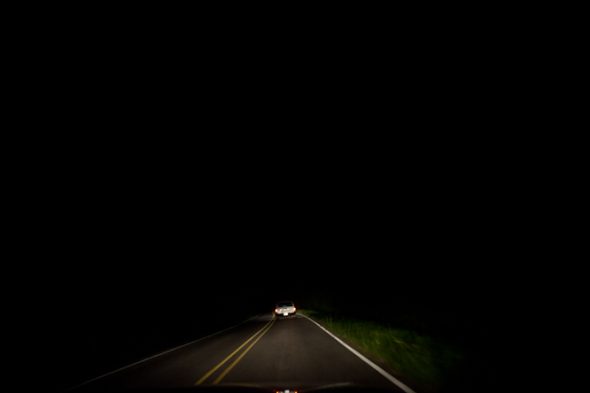
On the truck ride over, the fisherman gives me the lowdown on where we are. We’re in Big Sky, Montana, a small town known for its large ski resort. It is located off of highway 191, which is known to get dangerous in the night time. Just when I’m about to ask him why, we find a tow truck guy and the fisherman drops me off there.

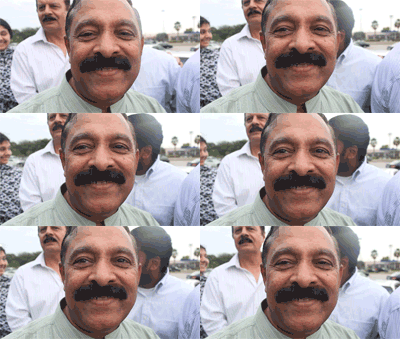
After saying goodbye to the fisherman, I head inside the tow truck office and am met by a mustache, er, a man named Ken. I give Ken the lowdown on what happened and how we need a tow truck asap. Ken nods his head and starts typing up a report on his small computer. Soon enough, Ken was getting his flat bed truck ready to pick up Aman and our Cobalt.

“Heh, so I guess we’ll be best of friends by the end of this.” I say to him.

“Ok.” he responds.

Clearly, Ken is a man of few words.

We pick up Aman and the Cobalt, and finally head towards Bozeman.

I plant myself by the side door, while poor Aman gets crammed in the middle between me and the stoic Ken. As we head north on the highway Aman notices the crosses lining the entire highway.

“What are those crosses for?” Aman asks Ken.

“For those that have died on this highway.” Ken responds.

“Wait, how do people die here?”

“In the night time, bears come out. Deers will run around. Slippery roads from the ice. You name it.”

Aman is fixated on Ken’s mustache and begins to chat with him about his facial hair.

“How long have you had that mustache?” Aman asks.

“Going on 41 years,” Ken’s muffled voice says from behind his facial hair.

“How long did it take you to grow?”

“About a year.”

“I consider myself a facial hair aficionado, and I’ve got to say, you have one fine work of art on your face.”

“Thanks, I’m not sure I know how to respond to that.”

I see the sun setting and realize that soon enough we’ll be breaking our fast. And that’s when I realized how tired and exhausted the day had made me. One of the best ways to get through the day fasting is to keep yourself busy and now, finally having a moment to relax, my brain catches up with my stomach and it’s a terrible feeling.

# # #

I wake up to the truck pulling over inside a parking lot. We have arrived in Bozeman and get outside the car. I remember taking a photo of Ken and asking him to smile.

“I am smiling,” he said.

Classic.

We exit the tow truck, take our stuff out of the Cobalt and wait for our host, Ruhul, to pick us up. Aman and I are silent and are dreading the inevitable talk about what we have to do if the auto repair took more than a couple of hours. Then of course, the worst question – What happens if we miss more than one day?

Soon enough, Ruhul, our host, shows up and we are on our way to his house.

Ruhul is one of the oldest members of the Muslim community in Montana. He is a professor in Mechanical Engineering at Montana State University.
According to him, there isn’t a single mosque in the entire state of Montana. Not one. It’s one of the only states in the entire country that doesn’t have a mosque.

I ask him where he prays taraweeh, the Ramadan night prayer.

“The university [Montana State] has given us a prayer room and another space for taraweeh prayers.”

Ruhul likes it in Bozeman, that’s why he’s been here for over 20 years with his two daughters and wife. He’s leading the push to help build the first mosque in the state. But it’s hard to, he says, because most of the Muslims here are transient. They come to the area to attend school at Montana State University but end up leaving after graduation. Ruhul says that makes it hard to build a mosque because there isn’t a longstanding Muslim community here. But once you build a mosque, a community will slowly begin to form around it.

We arrive at his house, break our fast and eat a great meal prepared by his wife. Ruhul tells us there is no access to halal meat whatsoever in the area, so his family has a halal meat company in Iowa regularly send meat via FedEx. Wow.

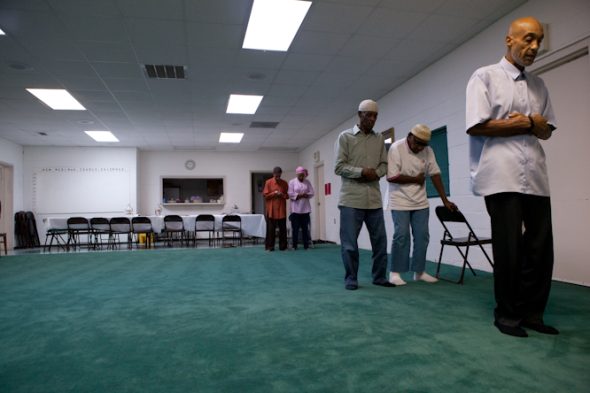
After eating, we head out to Montana State University, where the community gathers to pray. We enter a small classroom where there are 15 people in the middle of praying the night prayer, Isha. We join in.

Around the room, I see about fifteen students and a couple of faculty members. They all look back at me and smile. I didnt plan on praying with the congregation today, but I felt compelled to. Maybe we will make to North Dakota tomorrow, maybe we wont. Whatever the case, we have to try and that’s all really we can do.

By Bassam Tariq

Sitting in a hallway at Montana State University — with a broken car and draining laptop battery — I feel like it’s a good time to look back at some of the best moments and photos of our first 15 days on the road.

Day 1: Mosque of Islamic Brotherhood – A brother eats the break fast meal in a hurry since the adhaan, the call to prayer, was right around the corner.
Day 1: Ground Zero Mosque – Bored security guard reluctantly poses for the camera.
Day 2: Augusta, ME – Two young men spend the hour before break fast memorizing the Quran.
Day 2: Portland, ME – A Southern Sudanese boy stares me down in the playground.
Day 7: Charlotte, NC – The summer school program bulletin board displays the best artwork for different kids.
Day 8: En Route to Jacksonville, Fl – The welcoming Confederate man.
Day 9: Jacksonville, Fl – A kid jumps off the slide.
Day 9: Mobile, Alabama – After getting kicked out of the Islamic Society of Mobile, we all come to this nice restaraunt. Ayan, a 13 year old Kurd, breaks his fast at his family restaurant with Kurdish Biryani.
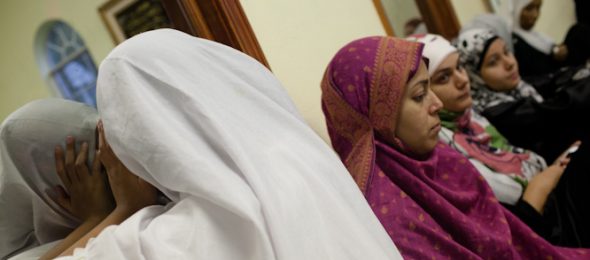
Day 10: New Orleans – AbdulRahman Zeitoun calls his son from the ladies section of the mosque
Day 11: Masjid Al Mu’mineen [ Houston, TX ] – Unfortunately, we had visited this mosque, but didn’t have time to write a story about our experiences there. We’ll get to it, one day.
Day 12: Oklahoma City, OK – Sarah goes down the slide in the playground near the mosque.
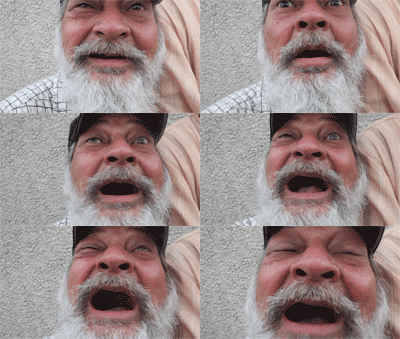
Day 14: Denver, Colorado – The brilliant Shaikh Abu Omar gets irritated by how close my camera is to his face and sticks his tongue out in hopes of ruining the photo. If only he knew how he saved it.
Day 15: Santa Fe, New Mexico – Rashid prepares a morning meal for Aman and I at the Taha Mosque. He spent the night at the mosque when he found out we’d be staying there.

Note: We apologize in the delay in getting up this post. If you look at our map, you can see this leg of our trip is making us do 8+ hours of driving a day. But we’ll try our hardest to get these stories to you guys in a timely fashion.

By Aman Ali

Faraz has been married to a Mormon woman for a little over a month. But he has known his wife Erika for almost 10 years so I asked him the reasoning behind why it took a decade to tie the knot.

“That’s because it took some time to convince her family,” he said with a chuckle.

Enter Utah, where roughly 62 percent of the people here follow The Church of Jesus Christ of Latter Day Saints. It’s a Christian church followed by the Mormons who believe after Jesus, a man by the name of Joseph Smith was also given a book of revelation from God in the 1800s in upstate New York.

Faraz spent most of his life in Utah and easily stood out in school as not just the only Muslim in school, but only minority.

“In middle school, here I was, this big 5’10 Pakistani dude in Salt Lake City,” he said laughing again.

Faraz is a brawny guy who speaks with an intriguing twang. He’s the kind of person who likes to strike up a conversation with anyone. We met him at the Utah Islamic Center, a mosque inside of a shopping center in the Salt Lake City area that’s home to a few dozen families who congregate here. Bassam and I didn’t know a lot about the Muslim community in Utah prior to arriving and Faraz graciously helped us out getting us connected to the people we should meet before leaving.

Salt Lake City is a growing community with over 20,000 Muslims. Muslims first began coming here in waves in the early 1980s and now the city has a significant population of Muslim refugees that have recently come from places like Burma, Bosnia and Somalia. But from what I understand, there aren’t as many Muslim women here as Muslim men. It’s not an uncommon sight for Muslim men to have Mormon wives, considering how many Mormon women there are instead of Muslim ones.

Wedding photo provided to us by Faraz

Islam doesn’t prohibit Muslim men from marrying Christian women, but many cultures that follow Islam see it as some kind of unwritten taboo (in my opinion). Faraz doesn’t want to sensationalize the adversity the Muslim community here gave him for marrying a non-Muslim white woman, but it was definitely there to some extent.

“I’d show up to Friday prayer and I’d never see any of my friends anymore,” he said. “I’d want to hang out and everyone said they were busy. I guess we’ve all been too busy for each other lately.”

Faraz said his wife isn’t a strict Mormon but it took her mother and stepfather an extensive amount of time to warm up to him, not because of who he was personally, but were understandably concerned that his wife would lose her Mormon identity.

“There are many things I disagree with about the Mormon way of life and I’ve made it very clear to her that I would like her to someday convert,” he said. “We’ve also agreed that our children will be raised Muslim. Things like that, you need to agree upon those things beforehand otherwise they can become problems down the road.”

But what made it easy through the years was Faraz’s family was always on his side. Before getting engaged, Faraz made the Hajj pilgrimage to Saudi Arabia with his family. There, his father asked him to pray to Allah if Erika was meant for him. Months later, he got married.

Faraz said it might have been a little awkward at the wedding, everyone enjoyed themselves. But he takes his entire journey in stride, because at the end of the day, there is still plenty of love all around both families. He said his mom and Erika have begun to bond over cooking. Erika, he said, is quickly becoming an expert at South Asian cuisine.

The Mormons

Faraz tells us that Salt Lake City is home to the Mormon’s most holy temple so we decide to check out the place. It’s a colossal complex where many Mormons from all over the world come to volunteer their time as missionaries. Across the street from it is the church’s just as impressive looking conference center.

We were greeted at the temple’s entrance by Sisters Todd (from Pennyslvania), Sister Han (from China) and Sister Aslam (from Pakistan). On their own dime, they traveled to Salt Lake City to volunteer for the church and welcome tourists like us checking out the temple. Each of them were happy-go-lucky missionaries eager to tell us more about their religion and learn about our 30 Mosques project too. But our conversation came to a close when two church security officers asked Bassam to delete all the pictures of the missionaries from his camera.

At first, I thought about how amusing it was that this is the second time on this trip that we’ve been basically kicked out of a place of worship. But it made me think more so about the fact that Bassam and I need to be more sensitive to people during the places we visit. I don’t know what the reasons why the security guards asked us to delete the photos, but I’m sure it had a lot to do out of respectful concerns for the church’s women. We Muslims would (and should!) have similar concerns if some random stranger started furiously snapping pictures of our women. Not because women are incapable of handling themselves, but we as Muslim men need to demand our women always be respected.

I don’t know any Muslims that would drop everything they’re doing to fly across the globe to welcome people to the holy Kabah in Saudi Arabia. But these Mormons have demonstrated it’s definitely possible for the human body to be capable of loving their religion this much. It makes me wonder, about myself most importantly, why we don’t have the same kind of love for Islam.

By Bassam Tariq

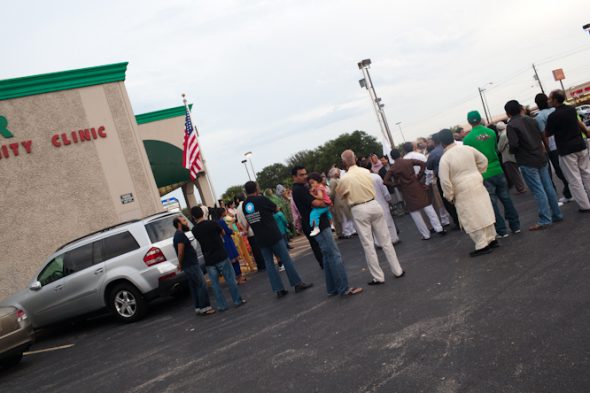
Imam Fahrudin stands in the parking lot of the Islamic Community of Bosniaks in Boise. Fahruddin, 21, was playing soccer at a nearby field before arriving at the mosque.

Note: Due to car troubles and long drive time, this post has been made a day late. Please accept our apologies as we are trying to stay on schedule with our route.

During the Ethnic Cleansings in the 1990′s, the US government helped bring thousands of Bosnian families to America. Like most refugees, they were settled in quieter parts of America, areas that are less crowded and more affordable. And that’s how many Bosnian families ended up in Boise, Idaho. But unlike many of the other refugee communities that were brought to Boise, the Bosnians decided to stay in the city. Many of the Somalian, Burmese and Afghan refugees that were stationed to Boise fled to different parts of the country where there were more people from their ethnic backgrounds.

“It’s a lot like home here,” Merzeen, a construction project manager who came to Idaho 12 years ago from Bosnia, says, “the climate, the outdoors.” The Bosnians, like Merzeen, had no issue embracing Boise as home.

Soon enough, the Boise Bosnians were growing in numbers (approx. 2,000), but there still wasn’t a community space big enough to accommodate them. The small 1500 sq ft makeshift house they prayed the Friday prayers in wasn’t enough for their growing community and they needed a larger space.

It took 12 years for the Bosnian community to come together and build a mosque. The community bought out an abandoned church and built a mosque with their own hands. Everything from the wall plaster to the electric wiring was done by the community members.

On July 4th 2010, the Islamic Community of Bosniacs in Boise officially opened its doors. It was a joyous and emotional occasion with food, riveting speeches and, of course, fireworks. The completion of the mosque was a long and labor intensive road. Thankfully, Denis, the de facto historian of the community, has been taking photos of the center since the first community meeting at the abandoned church.

The following moments are taken from Denis’ extensive collection of photos that can be found in the Boise mosque, tucked away in the bookshelves binded neatly inside five white large photo albums.

The first meeting held at the abandoned church right after the purchase of the property was finalized.
The community bought the church for a half million dollars.
During the construction, at any given point, there would be close to 40 community members helping out.
Community members take out theseats from the church hall to make space for prayer. The prayer area of the mosque, musala, was completed within two weeks of the construction.
Many photographers in the community have meticulously captured every step in the building this mosque.
Since many of the Boise Bosnians are construction workers or electricians, the community didn’t feel the need to hire any outside laborers.
After all the construction inside was complete, the last step was to put up mosque sign.
The community members climb to the top of the mosque in celebration of the mosque construction being completed.
In celebration of the mosque’s opening and Independence Day, the community held a fireworks show on July 4th.
As the congregants enter the completed mosque for the first time, a young man tries to hold himself together.

By Bassam Tariq

Amanullah has been working in casinos for over 29 years.

“Nobody enjoys this work,” he tells me as he sips on a cup of chai. “But we do it because we want a better life for our kids.”

Amanullah oversees slot machines at the MGM Grand Casino and is a board member of the Jamia Masjid, a mosque in downtown Las Vegas just minutes away from The Strip, the city’s infamous road of casinos and hotels.

Gambling is prohibited in Islam, but Muslims working in casinos is somewhat common here.

Amanullah smiles with an almost cotton-like beard as he talks about the spiritually grueling lifestyle he lives, so that he can make a better life for his kids. He’s an active person at the mosque and I can only imagine the type of criticism he gets from his fellow Muslims for working in casinos.

“They may not say it to me directly, but oftentimes I can feel it,” he said as he nods his head and blinks slowly.

He grew up in Afghanistan and came to the United States in the 1980s when the Soviet Union invaded. He settled in Las Vegas because he had an uncle that lived there that was all alone. He took a casino job because he desperately needed money to support his family and send home to relatives oversees.

“I had no money,” he said. “I used to walk my daughter to school and I would have no money to even buy her milk. I was only making enough to cover rent.”

Many of the people who work in casinos are immigrants from foreign countries like Bosnia, Afghanistan, Morocco, the Philippines and Somalia. Most of them came to Las Vegas because they had friends or family already living here.

Amanullah says he’s never enjoyed working in casinos and it eats at him inside working at institutions that center on indulgence and extravagance.

“In all my years I’ve never gambled or sipped a drop of alcohol,” he said. “I’ve never enjoyed seeing any of this around me and as I get older it becomes more and more difficult to stand this. The only thing that gives me peace is my family and the masjid.”

I stared into Amanullah’s eyes and began thinking about my father. My father travelled 5-6 days a week on the road for a baking company and never enjoyed a single moment of it. But like Amanullah, he did it for his kids. The bags under Amanullah’s eyes remind me of my dad’s as he came home from a long week of work too exhausted to do anything but collapse on the couch.

There’s something many people don’t understand about the need for a man to provide for his family on his own, and what lengths he’s willing to go to in order to make that happen. Amanullah tells me he’d rather do this than rely on welfare or other forms of governmental assistance to feed himself. As much as he hates working in casinos, it helped put his daughter through college.

I spoke with several Muslims at the Jamia mosque who work in casinos. Each of them have their own stories about how they got into the business but none of them enjoy it.

“Look, this life is pathetic,” said Bilal, who recently got laid off from a casino. “The management has so much control over you that you can’t do anything. You can’t even move around without someone watching you.”

I asked him why go through the torment then?

“The money,” he said. “A manager can make somewhere around $85,000. But you’re like a robot at work and all you can think about is your family.”

Bassam and I walked through the Aria Casino on The Strip that many Muslims are starting to work at since it opened in December. I walk past countless rows of slot machines as my ears begin to rattle from the clanging slots that gulp up coins like a vacuum cleaner. My stomach begins to churn as I’m smothered by the smell of cheap cigars and Axe Body spray from tourists trying their luck against the casino card dealers.

I think to myself, “This is the life these Muslims deal with every day, so that their family doesn’t have to.”

As we’re getting to leave the Aria casino, Bassam and I speak with Kariuki (pronounced Karaoke). He’s a Christian man from Kenya who’s been shining shoes in a casino bathroom for three months. He said working here has good days and bad days so we asked him what a good day entails.

“A good day, ha!” he said with a chuckle. “A good day is when I get money. There is no life here. The only thing we do in life is work and sleep. When I go out with someone, all I think about is ‘Is this going to make me late for work?”

Dr. Aslam Abdullah is the director of the Islamic Society of Nevada, the group that runs the mosque and is editor of the Muslim Observer, a publication based in Dearborn, Michigan. Before we left Las Vegas, we chatted about this whole Muslims in casinos issue and the complications surrounding it. He said before we point fingers at Muslims for working in casinos, we really should point fingers at ourselves.

“This is the failure of our leadership and institutions to provide for the social and economic well being of our community,” he said. “I talk about this in the khutbahs (Friday sermons) a lot and I tell people ‘Before you look down on them, find them an alternative.’”

He explained most of the Muslims who work in casinos are immigrants who take the jobs because it’s unskilled labor that pays well. It’s our failure as Muslims, he says, to help them integrate into society and help them find a way of life that doesn’t go against Islamic guidelines. Rather than condemn them and reject them, it’s our obligation as Muslims to help them.

“We’ve developed this ‘holier than thou’ attitude where we look down on people who don’t memorize as many surahs (chapters) of Qur’an as us,” he said. “But what good is memorizing 30 surahs compared to 10 surahs, if you don’t understand or follow any of it?”

Make no bones about it, no Muslim in their right mind will condone the concept of working at a casino. It’s tough to make it in this country, and many of these Muslims will go through morally compromising situations if it means that their children can live a life where they won’t have to. Simply slamming Muslims who works in casinos is too easy and basically pours gasoline on the flames that burn the bridges between us.


Bassam explains, “We pulled up to the exit of the Islamic Society of Nevada in Las Vegas and were blocked by three kids daring one to jump over the chain. The kid fell a couple of times, but the times he leaped successfully were poetic.”

By Bassam Tariq

Understated moments. There are many. Here’s hoping you enjoy one or two of them.

Jesus Fliers

Tired and starting to feel a little hungry, we arrive in Santa Ana, California and began our search for this hidden Cambodian mosque. A large group of people are gathered near the mosque and are passing out fliers. They see Aman and I walking towards them and stop us.

“Hey brother,” one of the older man says.

I smile.

“We have this live concert tonight and would love it if you can come with us. There will be prayer and we’ll be celebrating Jesus.”

I take a flier from him, read it and tell him I’ll think about it.

A block over, I see an open courtyard and three Cambodian women wearing hijab sitting under a tree. Two young girls playing basketball, and a group of young guys hanging out in izaars. Looks like today is going to be an interesting day, I’ll have to take a rain check on that concert.

Two Shots and a News Special

Saleh does what he wants, when he wants. This was made clear when he walked into the masjid, interrupting the conversation we were having with one of the elders in the community, and began grilling us with questions.

“So are you here to raise money?” he asked us.

Aman was quick to clear our name and plug our site. But at that point Saleh was disinterested and continued on his merry way.

He allowed me to take photos of him and looked at each photo after they were taken.

“I’ve been shot five times and I just got out of jail.”

No joke. One of the community members was there when he got shot twice. The story goes something like this – Saleh’s home boy was being picked on by the rival Latin gang and Saleh didn’t like that. He confronted the crew alone and began throbbing punches at six to seven of them. Saleh was uncontrollable, knocking the Latin gang members like bowling pins. They couldn’t stop this Cambodian juggernaut until a guy pulled out a pistol and shot him twice. bam bam and Saleh was on the ground.

Saleh was shot in the butt and leg. The ambulance and local new stations showed up in minutes. As the local news channel reported the shooting, Saleh waved and smiled at the camera as he was being transported into the ambulance. Getting shot in the buttocks and still cheesing for the camera? Yes, that is badassery.

That’s Brisk, Baby

Around the corner of the mosque, a kid walks around with a 20 oz. bottle of liquid.

“This is pee pee.” The kids tell me. He has a thick Spanish accent and smells his plastic bottle with amusement. It looks more like iced-tea to me.

“It’s not piss,” his friend says.

“Smell it!” he yells.

After his friend smells it, the boy runs to me and makes me smell it. And yes, it is pee pee.

The question became less on if it’s pee-pee now and more on who urinated in that bottle?

“Dont look at me…” the kid with the unzipped pants holding the smelly bottle of piss says.

Doctor Who

Right after Asr, the afternoon prayer, I sit around in the prayer room with some of the congregants. Their topic of discussion today: expansion.

Like every mosque we have visited in our trip, there were a lot of talks of expansion. The congregation looked small to me, and I wondered, do they really need to expand?

“We need more parking here. There is absolutely no place for parking.” Says Mohammad Saeed, the president of the Mosque. “that is why less people are coming to the mosque.”

Are there more Cambodians that come here for prayer?

“There are more than Cambodians that we have to look out for.”

So what’s keeping you all from expansion?

“I don’t think there is anyone in our mosque that makes more than 15 per hour,” Ghazali, a young man with a bluetooth headset that seemed conjoined to his ear, says, “there are no doctor’s here.”

The congregants nod their heads.

Dodging Shots

I see a man entering the mosque and wait for him to enter so I can take a great candid shot. I begin snapping when he enters. AHHH!! The man screams and flings his back to the camera.

I freak out. Did I do something wrong?

“That is Harun, he is the masjid caretaker,” Mohammad Saeed, the president of the mosque, says, “he was hit by a claymore in Cambodia during the Khmer Rouge. He is not all there. Please excuse him.”

The Grounds

The grounds right outside of the mosque is the center of the community. Two girls from the community play basketball without a goal. The goals break often which ends up making the grounds just an open concrete space.

Abdul Ghoni, I think

Abdul Ghoni halts in the middle of the playground near the mosque and starts doing push-ups. He does five, six, seven and then stands back up as if nothing happened. He is 27 years old and works at the local school. He cleans tables, picks up trash, and sweeps the floors. He tells me what he does with pride and dignity. Kareem, our local guide, tells me that Abdul Ghoni doesn’t miss a single prayer at the mosque.

I ask Abdul Ghoni to spell his for me. He thinks for a minute and asks for a piece of paper and a pen.

I hand him a black papermate pen from my back pocket. He starts shaking the pen furiously because it’s not working. I try scribbling on my hand to see if it works another surface and it doesn’t give in. We leave the pen alone and Abdul Ghoni goes his way. And I stay put speculating how to spell his name.

Courts

The basketball goals in the grounds of the mosque are broken all the time, so the kids sneak into the local elementary school to shoot around an hour before Maghrib.

Ayoub’s Truck

I have seen very few parked trucks that sell both funyuns and watermelons. Ayoub, one of the pioneers of the community, runs this truck right outside his house. Ayoub’s wife runs the truck and, surprising, the mobile store helps bring in a decent amount of income for the family. I ask him why he started the truck store.

Ayoub looks over at his wife and says, “Eh, it keeps her busy.”

Cambodian Doe

Forgive me, I have forgotten your name. I saw you standing in the distance as the sun was setting in this small neighborhood, where the majority of the congregants are either Cambodian or Hispanic. I couldn’t pass up the opportunity to take this photo.

It took me a while to find the right place for you to stand and then spent the next two minutes snapping away. Thank you for your patience. Also, you have very soft hands.

Great great great

Three generations old. She came when she was in her early 60′s. She walks around the community space. She sits under the shade of the tree waiting for her other friends to show up.

“The elders in our community are dying,” Mohammad Saeed, the president of the mosque tells us, “just last year, we lost five elders.”

The great great great grandmother looks over at the sun, patiently waiting for Maghrib, the time for break fast, to approach.

Food Time

Un-Pakistani

Looking for a place to sit with my dinner plate, I somehow end up next to a group of three Pakistani guys. We all look at each other and ask ourselves, “how did he end up here?”

After telling them about the 30 mosques project, I ask them how they got here.

Malik lives about 20 minutes away from here. There are three other mosques that are closer to him, but goes out of his way to come here.

“There is no politics here. No elitism. There is none of those things that are found at the local Pakistani mosque. Everyone here is unassuming,” Malik says.

“Really?”

“Yeah! In those Pakistani mosques the doctors sit here, the engineers here, and the cab drivers here. Over here, there is none of that. No one will ask you what you do for a living and everyone sits together.”

After Malik said that, I couldn’t help but wonder what he did for a living — it must be Pakistani in me.

Matt, er, Mohammad Saeed

“I don’t feel like vacuuming,” Mohammad says after we break our fast, “I’ll just do it tomorrow.”

Outside of the community, Mohammad goes by Matt Ly. He is the el jeffe of the center. A stout, but muscular man who watches over the entire mosque operations. He stares at the carpet, picking up small pieces of lint and crumbs of food with his hands.

Mohammad’s uncle was one of the first Muslim Cambodian refugees in 1979. He sponsored 17 Cambodian families and brought them to the states. This was considered one of the first emigrations of the Cambodian Muslims to the states. When the families first came from Cambodia they started in different cities and went their own ways. A small community ended up in Santa Ana and established this mosque in 1982. Soon enough, the Santa Ana community began calling all the Cambodian Muslims convincing them to settle here in Santa Ana.

The brutal communist regime, Khmer Rogue, had killed and tortured many in Cambodia. Religion wasn’t allowed, so the Cambodian Muslims would pray secretly and hold small Friday prayer services. They all had an incredibly difficult time and went through it together. So when many of them settled in the States, it made sense for them to live amongst one another and heal together.

Mohammad was 17 when he escaped Cambodia. After things finally calmed down, he went back to Cambodia in hopes of staying, but ended up coming back to the States. His family is here, his work is here.

“When I leave to a different state, I miss California because, you know, it is home.”

Mohammad pauses.

“But when I go back to Cambodia my heart rises and I don’t want to be anywhere else.”

Mohammad gets up, heads towards a closet and comes out with a vacuum.

By Aman Ali

We left New Mexico much later than expected so our 8-plus hour drive to Phoenix meant we had to break our fast on the road. But with awesome scenery to look at on the way, we weren’t complaining whatsoever.

We broke our fast with a bag of nectarines that Benyamin, the woodworker we met earlier that day, grew at his home in Abiquiu, New Mexico. His wife made us some awesome chocolate banana bread too.

We get to Phoenix shortly before 9 p.m. to find the mosque right off the highway. The place is still packed as people prepare for Taraweeh, the Ramadan night prayers.

We’re greeted at the mosque by Usama, the mosque’s president. He’s a straightshooting kinda guy that talks to us in depth about the history of Phoenix’s Muslim community.The city has around 80,000 Muslims and a huge refugee population of people from Afghanistan, Bosnia, Albania, Somalia and other countries.

He said it’s great that there are so many cool cultures in the city, but what has happened over the years is the Afghanis have formed their own mosque as have the Bosnians and Albanians, etc. etc. etc. Segmentation is a huge problem among Muslims in this country. I completely understand it may be unintentional when people immigrate to this country, they find comfort by linking up with people of similar backgrounds. But in 2010, we can no longer afford to do that. Out of the over 300 million people that live in this country, only around 7 million people are Muslims (and that’s a liberal estimate). So we simply cannot afford to divide ourselves.

On the opposite side of the highway from the mosque is the ICCP’s future home, a colossal mosque that you can see from miles away. The outside structure of the $3.5 million building is already finished and the mosque board is trying to fundraise the remaining money they need to complete it.

We asked Usama if building a mosque this vivid necessary, especially in an economic climate where many Muslim communities are struggling to afford running their places. He said the mosque isn’t in debt at all and is only building things they can afford. Plus, he said it’s a house to worship Allah, shouldn’t we try to beautify it as long as it’s well within our means?

“We want people to drive by the highway and know that Muslims are here in this community,” he said. “We have had Muslims we’ve never met before drive by, see that there is a mosque here, and then want to donate.”

This new building will be the future place where the community will worship, and Usama said the current mosque will be used primarily to expand the Islamic School for the children.

I asked him if the ICCP has gotten any opposition to their new mosque, in light of all the Ground Zero hullabaloo in New York. He said unfortunately they have been getting opposition. What’s interesting is many of the city planning boards have been incredibly supportive and cooperative with the mosque’s plans over the years, but in recent months they seem to be scrutinizing the plans even more and pushing up deadlines for them.

The current mosque has been in the neighborhood for over 15 years to little or no complaints from local residents. Now all of a sudden, a few neighbors have regularly complained to the city about the mosque’s parking situation and other issues. The city recently even tried to prohibit street parking by the mosque only on Fridays from 11-3 p.m., which is usually when the Friday Jummah prayers are.

This neighbor below, the mosque has tried to reach out to him and make peace by doing things like bringing Ramadan dinner food to him. Usama told me he’d graciously accept the food, only to call the city the next day to complain about the mosque’s parking.

I think we as Muslims need to focus less on the Ground Zero mosque and more so on places like this or other communities like Murfreesboro, Tennessee. The Ground Zero mosque (and I dunno why I’m calling it that) is pretty much a done deal at least from a municipal approval standpoint. So let’s not forget about the other communities across the country where Muslims need our help. Remember, there are only 7 million of us.

By Aman Ali

Note: We seem to have misplaced a substantial number of amazing pictures we took during this visit, so our sincerest apologies. We will try to find them as soon as possible and post them.

Bassam and I were getting ready to leave New Mexico for an eight hour drive to Arizona, but we took an incredibly worthwhile one hour detour to Abiquiu, New Mexico. The small town is home to Dar al Islam, a divinely radiant mosque made from adobe mud that sits over a mile up in the mountains. We spoke with Benyamin, a woodworker from Holland who lives nearby the mosque. He told us to meet him by his home and he’d take us there. To say Benyamin is good with his hands is putting it lightly. At the bottom of the mountains, he built a mosque that he and his neighbors regularly use for prayer.

Benyamin carved the designs on the door as well. I’ve never seen anything like this in my entire life, this man is divinely gifted. May Allah continue blessing him for his talents.

We found Benyamin inside a workshop shed where he was busy working on another door. He used to run a woodwork business for decades but has taken a break from doing it regularly because his health isn’t what it used to be. He told me it varies, but it only takes around a week and a half for him to make one of those intricately designed doors.

Benyamin and his wife regularly have company stay with them in the mountains and the two created a guest house for people to stay over. Below is a yurt, a round traditionally Central Asian tent, that the couple uses to put on concerts and even hold weddings in. They said they love having people come over, so I definitely need to make plans to come back!

Benyamin then took us up the mountain to Dar al Islam. It was built in the early 1980s at a time when there were around 30-40 families that frequented it daily. The mosque has a unique pueblo design and its foundation is made from adobe mud.

The mosque sits on a vast property in the mountains that many movie production companies use for filming such as the flicks City Slickers and Young Guns (one of my fave movies). In fact, that day we saw a production company that was filming Cowboys and Aliens, the upcoming Harrison Ford and Daniel Craig sci-fi movie. Next to the mosque is the Islamic school and inside I found some more doors that Benyamin carved. He told me this one took him a little over a week to do

Sadly, Dar al Islam is only used for special events like conferences and camps. I heard at least a dozen different reasons why it’s not being used regularly, but everyone I spoke to agrees they wish it was. Abdurrauf, a Belgian man who is the caretaker of the mosque, said one of the primary reasons why it’s not being used is lack of funds to run it. Plus many of the board members of the place are getting old and they could use some young new blood to energize the place.

I hope they do find people and funding soon, because this is no doubt one of the best Islamic treasures I have found in this country.

By Aman Ali

Hakim Archuletta tells me it’s time to break our fast and I pull my smartphone out of my pocket to ascertain if it’s time to do so. He grins and puts his hand on my shoulder and asks me to look at the colossal mountain landscape just a few miles from the house we’re standing outside of.

“You won’t need that phone,” he says to me. “See that mountain? When the sun is setting and it’s no longer visible above the mountain, that’s when it’s time to break our fast.”

As someone who is constantly on the go and shackled to technology, me coming to New Mexico today was the perfect place for a spiritual detox. We pulled into the TaHa Mosque in Santa Fe, a pueblo looking building that a group of about a dozen people use for regular prayers.

Prior to buying this property three years ago, the Muslim community here for around 20 years worshipped at locations all over the city. Oftentimes they’d celebrate the holiday Eid with prayers inside of a carpet store one of the Muslims in the area owned.

I arrived at the mosque completely burned out from the six hour drive and lack of sleep I got the night before. I go inside the prayer room to do my afternoon asr prayer. I’m immediately taken back by the breathtaking view of the shrubs and mountains from a window facing me while praying. I can’t even imagine what it would be like praying here every night. Without even needing a nap, my fatigue slowly starts to fade as I continue to soak in the soothing atmosphere inside the mosque.

Later, Massoud, an active member at the mosque, arrives and tells me a little bit more about the community here. He’s an Iranian man with a salt and pepper beard who speaks in a bouncing cadence everytime he gets excited about something. I ask him what the ethnic makeup of the mosque congregants are and he says he doesn’t know, because the people here don’t even bother to ask.

“No group or person is in charge of this mosque,” he said. “The only person who owns this place is Allah.”

The front door of the mosque is open and we slouch back on couch chairs facing the entrance. As we’re talking, we cut our conversation short to watch a hummingbird whiz by the entrance.

To break our fast, Bassam and I drive about 20 minutes north to eat with Hakim Archuletta and his son Yaseen’s family. Yaseen walks out of his intriguingly funky looking home to greet us with his child.

Hakims are traditional Islamic doctors. Hakim Archuletta is one of the world’s most respected lecturers on Islamic medicine. He embraced Islam in the 1960s and has studied all over the world under some of the most revered scholars in places such as Pakistan, England and North Africa. His practice focuses on spiritual healing and homeopathic medicine.

He’s a relaxed man who flashes his upper teeth every time he smiles. His rests his legs by folding them on his chair as he speaks in depth about his practice. He’s incredibly well read and refreshing to talk to because he doesn’t rub his wisdom in your face.

Yaseen grew up in New Mexico and married his wife Sobia, a Pakistani architect who is a whiz at cooking. For dinner we eat a soup Hakim Archuletta made from Mexican squash and beans, and Sobia made lamb curry, rice and kheema (seasoned ground beef) that was stewed with a variety of peppers.

I’m a huge foodie and I’m caught off guard by how succulent the meats are that Sobia cooked. She and Yaseen tell me they keep sheep and chickens in their backyard that they raise organically and slaughter Islamically on their own. Plus, just about all the vegetables we ate tonight were grown in their backyard. It’s so cool to meet Muslims that practice their religion by harmonizing their lifestyle with the earth.

My phone begins to ring in my pocket but I completely ignore it because all I can do is focus on how good this food is. It was more than just being hungry from fasting. I felt energized after my taste buds began to realize how intrinsically beautiful the food was.

I live my life as both a reporter and a standup comic, so my day relies heavily on my smartphone and laptop catching up with emails, scheduling appointments and spending hours in front of a word processor screen writing stories or jokes. Spending time in New Mexico today made me realize how much I center my stressful life around man-made creations. It’s amazing how much more fulfilled I feel today marveling at God’s creations instead.

By Aman Ali

Sheikh Abu Omar counted on both of his hands how many times he came close to dying. The 80-year-old man has escaped drowning, political assassinations and even a fatal health diagnosis in the 1970s that remind him how blessed he feels when he wakes up every day.

“Allah has protected me,” he says as he puts his left arm around me and points his right index finger into the air. “He did not want me to die on any of those occasions. If that doesn’t convince you to have faith in God, then I don’t know what does.”

Sheikh Abu Omar Al-Mubarac is a pioneer of the Muslim community in Denver and is still an active volunteer here. He grew up in Iraq and escaped the country in the 1960s when the Baath Party, Saddam Hussein’s ruling group, wanted him dead because he refused to side with them. He’s been living in the Denver area since 1968.

Sheikh Abu Omar was actually an officer for the Iraqi government and said he knew Saddam as he worked his way up the ranks in the Baath Party in the 1960s. But he couldn’t side with what the party was doing, and like many dictators that rise to power, the Baath Party tried to kill him because of his opposition. He escaped and moved to Colorado and got a job working for the state examining workplace safety claims. To this day, he still lobbies the state government on union and workers issues.

His lips pucker every time he smiles and he slaps me on the back with each joke he tells. I ask him what were his reasons for staying in Denver for so long as opposed to anywhere else in the world. He said he loves living here, he just gets irritated with the weather here.

“The weather here is like a woman,” he said. “She never knows how to make up her mind.”

As he said that, in the back of my mind I start thinking about how majestically beautiful the drive into Denver was. We got stunning views of the Rocky Mountains coming into town.

Our plans of where we’re going to sleep fall apart at the last minute and the sheikh is gracious enough to let us sleep at his place overnight. His cozy home is so crammed with files and books from his services center that you have to come up with clever ways to maneuver around the place without stepping on something. There dozens of framed certificates and civic activism signs that cover just about every open space on the wall.

“If you’ll excuse me, it’s night time and I just need to take my medication,” he said while trying to avoid stepping on a box of files in front of the kitchen. “I just need to take my birth control and Viagra, and then I’ll be fine.”

He comes back and sits on the couch as Bassam begins to take pictures of him.

“My face is going to break your camera,” he says with a laugh before sticking out his tongue for a goofy pose.

For an 80-year-old man that’s seen so much in his life, I asked him where he gets his optimism from. He points to the rectangle rug that’s in front of the couch.

“See this? It’s about the size of a grave,” he said. “Whenever my head gets big, I think about my grave. Because when I die, no matter what I have in life, I can’t take my possessions to the grave with me.”

By Bassam Tariq

Aman sits inside the Chevy Cobalt as Maghrib, the sunset prayer, hints at her coming.

NOTE: Because many people in Wichita feel that their community has been misrepresented, we would like to offer them a chance to represent themselves. If you grew up in Wichita or live there now and would like to share your experiences in the community please email me, Bassam, at info@30mosques.com. We understand how communities can feel marginalized, and are excited to share a story from someone who has a better grasp of the city and the community than I clearly have. – Bassam Tariq

NOTE 2: I also am changing some of the language. I understand that we haven’t seen all of Wichita, we just explored the areas around the mosque.

Taking pictures outside of the Islamic Society of Wichita, I strike up a small conversation with Ammarah, a journalism student from the local university, Wichita State, who is following us today.

“So, what do you do for fun in Wichita?” I ask.

“Not much. We just eat out,” she shrugs, “but since there are very few halal places, we only go to places that have good fish I guess.”

Hello, Kansas.

We reach the Wichita mosque around 5 PM from Oklahoma City and sit in our car wondering what we’ll talk about today. The communications director of the mosque, Aisha, happily give us a tour around the mosque. Visiting a new mosque everyday and getting similar tours of the facilities has started to make me nauseous since I was fasting, so I cut to the chase and ask her to give me the skinny on Muslims in Kansas.

Ayesha runs down a list of occupations Muslims are doing in Kansas and it’s all very similar to what Muslims are doing in other parts of the country (i.e. doctor’s, engineers, business owners, etc.). What’s fascinating though is that Wichita has the largest airline manufacturing industry in entire world, it’s been fittingly coined “the air capital of the world.” That’s one of the main reasons why tons of Muslim engineers ended up working here for airplane manufacturers such as Boeing, Airbus and Cessna. The local university, Wichita State University, also has a great aerospace engineering program so many Muslim folk who come from abroad end up staying here and working at the research facilities of these companies.

The places we see in Wichita are bare. Still, the clear blue skies cast a tenderness and ease that a place like New York City would never quite understand.

We come back for the break fast and are greeted by Dr. Assem Farhat, our host family for tonight. We eat chicken gravy with salad and pasta while we talk about how relaxed life is in Wichita. Dr. Farhat is Syrian and has spent most of his life globetrotting through Europe. He did his medical schooling in Europe and his specialization in Cardiology in Cleveland, Ohio. Dr. Farhat has lived in many large cities, but has ended up in Wichita because of work. He has been here for 20-plus years and has no plans on leaving. Dr. Farhat, like a lot of the Muslims we’ve met in Wichita, loves it here.

“Wichita is a great place for living,” he remarks, “just not visiting.”

Touché.

By Aman Ali

Before we left Oklahoma City, I told my homegirl Sarah that I’d check out the Islamic School she teaches at, the Mercy School in Edmond, OK. It’s affiliated with the Islamic Society of Greater Oklahoma City mosque that we visited in this community. Pretty awesome place, the new $9 million building opened up at the beginning of Ramadan and is for students grades Kindergarten all the way through High School. Sarah was telling me that this building is the largest Islamic school in the Midwest. That’s a pretty big deal if you think about it.

Sarah and some of the other teachers were insane enough to let me teach a bunch of classes today. I taught 4 classes – Math, Science, Social Studies and a Speech and Debate Class. I talked about 30 Mosques in some of the classes and I was surprised how well traveled a lot of the kids were. Since the kids are fasting during Ramadan, during their lunch period I performed a small stand up routine. Pretty cool kids. I’d definitely come back to visit them in a heartbeat.

I think he was reading too many posts on the 30 Mosques site

No, I didn’t pay any of them to be in this photo.

By Aman Ali

My homegirl Sarah Albahadily made all the arrangements for our visit to Oklahoma City today, and she’s just about as Oklahoma as you can get. She proudly blasts country music in her car and often wears cowboy shoes under her long flowing abaya dress. On the 4th of July, her mother puts on a headscarf designed like an American flag.

“A lot of people make fun of Oklahoma for being filled with rednecks” she tells me as we walk around the mosque. “Which is fine, I get it. But what bothers me is when people don’t think that we’re developed. We’ve got a lot going on here.”

Before you say “Wow, there are Muslims in Oklahoma?” think again. Suhaib Webb, probably one of the most sought after scholars on the Islamic speakers circuit today, is from this state. So is Kareem Salama, who’s got crazy buzz right now as being a Muslim country music artist.

I’ve noticed a lot of Muslims that live in smaller towns unfortunately are either embarrassed to live where they live or anxious to jump on the first opportunity to move somewhere else. But what’s relieving about this community is how content and proud people are about living here. I asked Sarah about some of the things she liked to do for fun as a kid and her eyes lit up as she talked about all the rodeos and country music concerts she used to go to. I try my hardest to downplay my secret love for country music, but I can’t resisnt once she started talking about Rascal Flatts and Garth Brooks.

Sarah grew up attending the place we visited today, the Islamic Society of Greater Oklahoma City. It’s a cozy mosque with radiant architecture that her father helped build. I know it’s incredibly cliche and hokey to point out the diversity inside a mosque, but it was definitely a melting pot in there. I stood outside the mosque’s parking lot as I saw a group of Hispanic Muslims arrive to prayer on motorcycles. Next to them a group of Iranians I overheard talking about a NASCAR race coming up. I found an air hockey table in the mosque’s second floor, which is all the convincing I’d need to come back here again.

We head back outside the building and Sarah nervously smirks as Bassam takes photograph after photograph of her in the parking lot.

“I don’t really like being the center of attention,” she said. “Very rarely will you see me have my picture taken.”

My background in reporting often makes me a little too inquisitive at times, so I decided to ease off my questions for her and just hang out with everyone for the rest of the night. To break our fast, Sarah arranged for a group of about 20 people to hang out with us at ZamZam, an Arab restaurant down the road that’s a popular hangout for many Muslims here.

I’ve been burned out a lot on this trip from all the traveling, media interviews and just keeping up with the 30 Mosques site in general. So it was an incredible breath of fresh air to just hang out with a bunch of people and goof off while eating some awesome food. For the two hours at the restaurant we were there, it was great to just forget about all the stress and just have a good time among all my newly made friends.

Afterwards, the Oklahoma crew took us downtown to check out the memorial for the infamous 1995 Oklahoma City Bombing. Chills went up and down my arms as I realized I was standing in front of the place where 15 years ago, two white Christian men, orchestrated the bombing of a federal building that ended up killing over 100 people.

As a Muslim, I realized this is probably the place where racial profiling for us began in this country (Granted, the first World Trade Center bombing happened 2 years before this). Immediately after the bombing, Muslims were blamed for the attacks because two men near the building were apparently seen speaking Arabic shortly before the blasts.The Council of American Islamic Relations (CAIR), had its first major campaign in response to the bombing.

And in 2010, Oklahoma City Muslims are arguably still facing backlash simply for who they are. Banning Shariah law is a ballot issue this November for local residents, even though no Muslim really proposed the idea of trying to implement it here to begin with. Candidates running for Congress here are basing their platform simply on the fact that they’re anti-CAIR.

But if you think these issues define what Muslims in Oklahoma City are like, think again dude. When I think of Oklahoma, I think of Sarah’s cowboy boots tucked under her abaya or people talking smack about who is a better NASCAR driver. I think we as Muslims need to get out of this dumb two-dimensional mold where we’re only seen to the outside world as people that are victims of hate crimes, have airport security problems, or these days are dealing with opposition to mosques. Sure those are important issues, but why have we allowed those issues to define us?

I dunno about you, but I’d rather talk about Garth Brooks than share with someone what my dumb take is on the “Ground Zero Mosque.”

By Bassam Tariq

In Atlanta, we visited the Mohammed Schools where we highlighted the Lady Caliphs, the high school girls basketball team that made it to the state championships a few years ago.

Here is a short video I shot of them playing a scrimmage against each other, while fasting.

By Bassam Tariq

Abdulahed Farooqi stands next to Synott Mosque. Inspired by our project last year, Abdulahed is visiting 30 mosques in 30 days in Houston.

Synott isn’t the name of the mosque we visited tonight, but that doesn’t matter because in the past ten years I’ve been frequenting it I’ve called the mosque nothing else.

This is your hometown mosque, that mosque where you learned about Islam, ran into your first Muslim crush, where you volunteered at the Sunday school and picked a fight or two when you didn’t have to. It’s that mosque where when you come back after such a long time, you still know you will be breaking your fast with a plate of biryani and yogurt. This is Synott.

Our family started frequenting Synott when we made the big move from inner city Houston to the suburbs. Before Synott, I never knew what a mosque community was like. We only went to mosques on Fridays in these small hole in the wall places near Pakistani restaurants. It was also odd to see people my age hanging out there and not at home.

Another reason why we attended Synott was because the gas station we ran was right next to it. My father would open the gates of the mosque for the morning prayer, Fajr, first and then the doors of our gas station. It was a tough place to be in for our family because we were selling alcohol with one hand and then helping to run the mosque with the other.

Friday prayers were always a little awkward because many of the congregants would end up at our store to fill up gas and buy some candy for their children. As the congregants would be coming in to buy lollipops or pay for gas, many of the day laborers would be cashing in their weekly checks and buying alcohol. The importance of Friday took on a complicated gray meaning.

Of course, we weren’t alone in this. This may as well be the Achilles heel of the South Asian Muslim community in Houston. Running a gas station is a lucrative business and many observant Muslims are guilty of running them. Some have come to terms with their business dealings others are trying to get out. In the beginning, our family was naive enough to think that most of the revenue generated from a gas station comes from the gas. Turns out, you only make 1 cent per liter, which really amounts to nothing. Beer, cigarrettes and lottery become the cornerstone of your business.

****

We enter Houston from I-10 heading towards 59 South. I see the mildly interesting skyline of Houston and am in awe. I can feel the smog rushing through our windows, the truck drivers trying to overtake us and the XXX Emporium’s neon lights hoping to blind us in midday. There is no place like home.

O Houston

Aman and I reach Synott mosque right before sundown and are greeted by old friends. I never liked the TV show Cheers but right about now, that theme song “Where Everybody Knows Your Name” seems so fitting.

The following photos are an homage to some of the mosque members that I’ve been seeing as I was a kid, the regulars.

Ismail Baker, the relentless volunteer. One day he will be directing traffic, the next day he will be making your Rooh Afza with milk.
Token Uncle sahib
Rashid, one of the mosque caretakers that has singlehandedly kept up the maintenance of the mosque.
Shahid Uncle, my dad’s only friend.
Mohammad Sarwar Tariq, the pops.

After breaking our fast and praying, Aman and I step outside of the mosque and plot our next move.

Ever since we planned on going to Houston, Aman has been adamant on making some contact with Hakeem Olajuwon, the legendary Houston Rockets basketball player who won the NBA MVP in 1994. Unfortuntately, Hakeem is in Jordan for Ramadan so it didn’t look like we’d run into him. But we decide to visit this strong Nigerian community that’s connected with him.
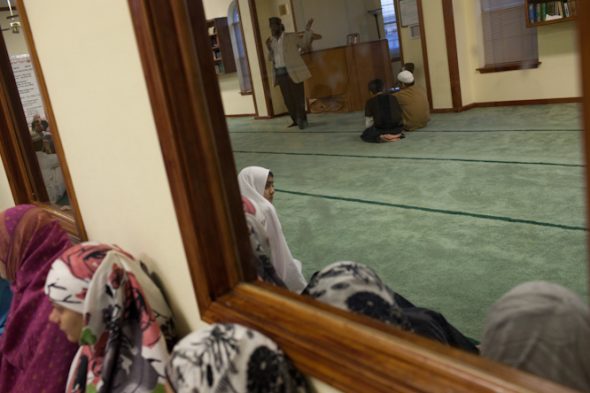
On the drive over to the Nigerian Mosque, Aman points at a gas station and wonders if that was the one my family ran. It was. I pull into the parking lot and step outside.
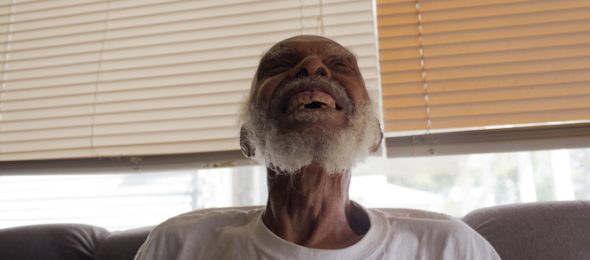
When we had the gas station, it was a red Conoco with shiny lights. My father opened it with the hopes of leaving his dead end job and moving forward as a self employed entrepreneur. It was a tough business to run, being open from 5 AM to 12 AM is no joke. It took us five years to get out of the business and when we did, we promised to not look back. The dilemma of course is that without this gas station we probably would still be in the inner city living in our cramped apartment. Running a gas station isn’t as black and white as you think, it’s complicated.

Aman asks me if I want to go inside to see how things are now. I think about it for a second, get back in the car and drive forward.