Qari Imam Gazi Khattab – GTA EID – Metro Toronto Convention Centre, South Hall
Comments Off on VIDEO: Qari Imam Gazi Khattab – GTA EID – Metro Toronto Convention Centre
Share it:
Comments Off on VIDEO: Andrea Horwath – GTA Eid – Metro Toronto Convention Centre
The Leader of the Opposition was a no show, yet the Leader of the Third Party in the Ontario Legislature is here today.
This is her third time attending GTA Eid Celebrations.
Andrea Horwath, Leader of Ontario New Democratic Party, was kind enough to answer my question about the upcoming Ontario Provincial Election and to personally share Eid Greetings.
She may well become The Premier of Ontario, one day.
Category:
Tagged with:
Share it:
Comments Off on VIDEO: Premier Dalton McGuinty – GTA EID – Metro Toronto Convention Centre
Share it:
Comments Off on 30Mosques.com | Day 27: Sleeping Through The Storm
By Bassam Tariq
NOTE: DUE TO HURRICANE IRENE, OUR UPDATES HAVE SLOWED DOWN. SORRY FOR THE INCONVENIENCE
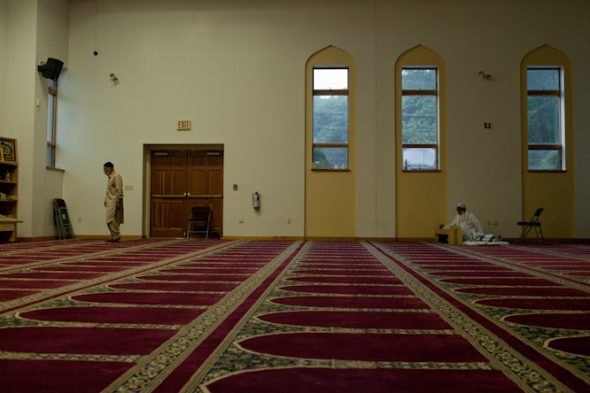
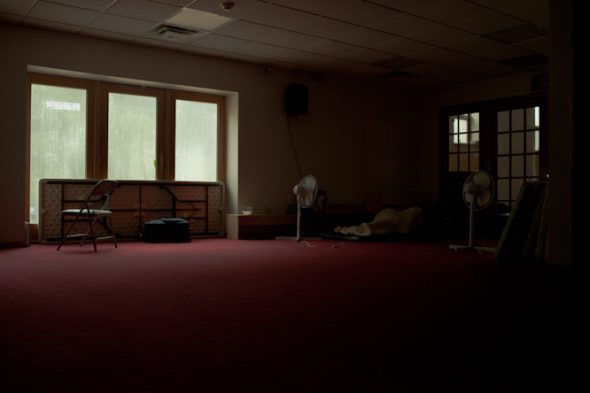
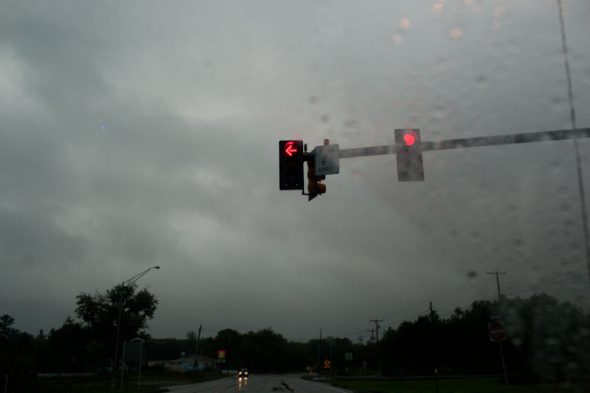
We sleep as Hurricane Irene passes us by. The electricity and water go out. Aman nudges me to wake up.
“Wake up. They want us to clear the sister’s area.” Aman says.
It was the quietest corner in the mosque the night before. So it made perfect sense to sleep there. I roll up my sleeping bag and head downstairs.
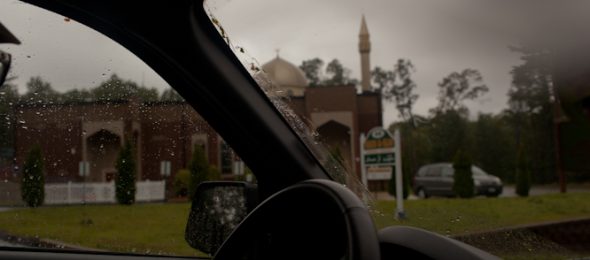
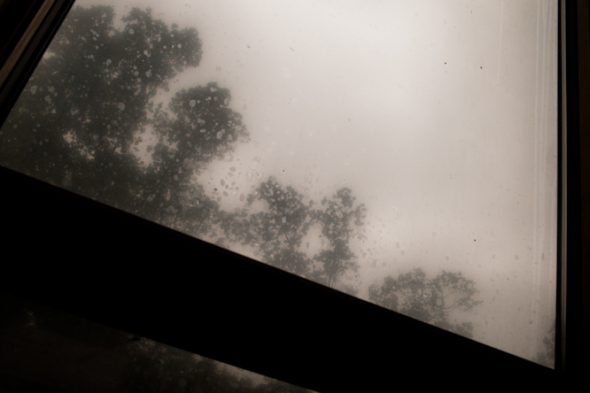
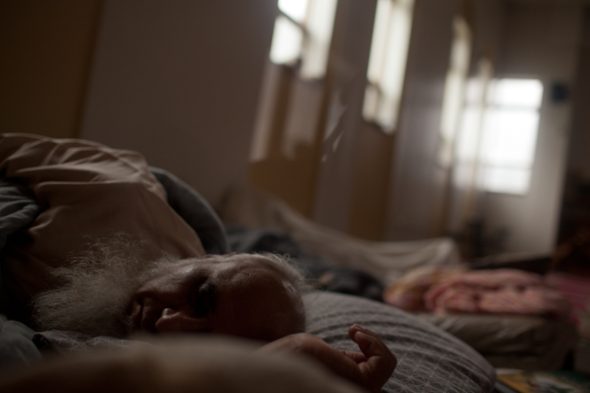
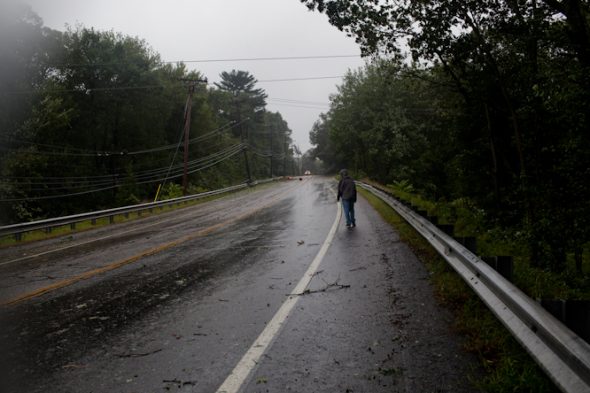
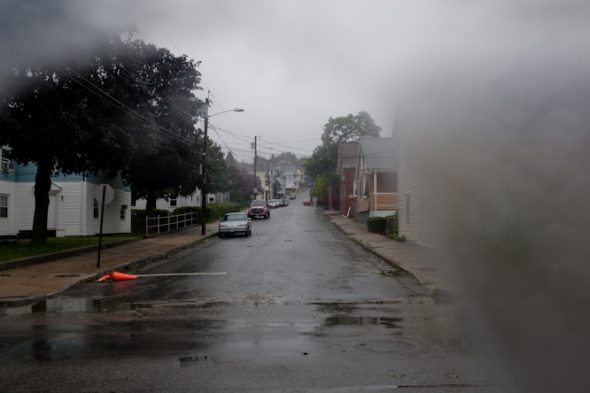
It is close to 12PM and everyone in the mosque is sleeping. The wind pounds the windows and the rain shakes the roof. All this happens as the congregation continues sleeping. I step out of the mosque to get some fresh air and am met with fallen trees and leaves blanketing the entire mosque parking lot.
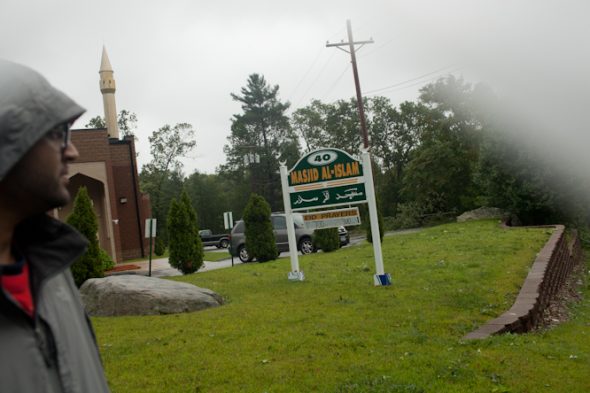
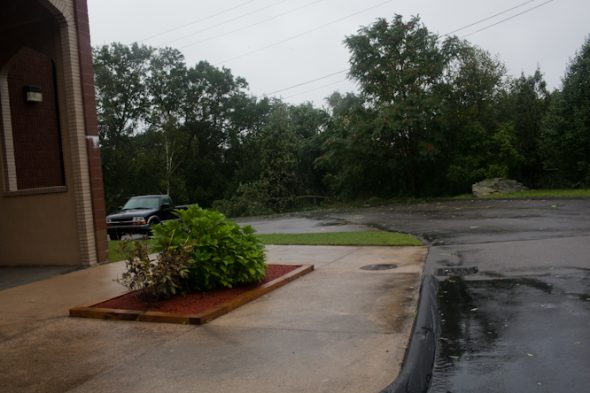
The Rhode Island mosque, Masjid Islam, is beautiful. It is located on top of a hill and is surrounded by nothing but trees. The land was bought a long time back by a Muslim cardiologist who then funded a lot of the mosques building from his own pocket.
I step back inside the mosque and am met again with the snores of the congregants. No one has woken up except for a Bangladeshi uncle, let’s call him Mujeeb Rehman. Mujeeb was up all last night reciting Quran with sporadic bursts of loudness. It would have been okay if he had kept a single volume throughout the night, but somehow or another, his random inflections added another hurdle to sleeping the night before. The man was a trooper. His last ten days of Ramadan are precious to him, that is why he won’t let any of us get in the way of it.
A minute later, he walks up to this Jake Gyllenhaal-look-a-like and talks about Quran reading.
“Uncle, you kept us all up last night!” I joke with him.
“Did I?” He says, puzzled. “I don’t know sometimes when I am reciting I forget how loud I can be.”
We smile and he goes back to his corner to finish reading the Quran.
Mujeeb is retired and is now resting in Rhode Island. Many people that live in Rhode Island, surprisingly don’t work there. Last night, many of the congregants in the community work in Boston or another city in Massachusetts.
“Rhode Island was known for its textile and jewerly industry.” Fawaad, a young member of the community tells me, “but because of outsourcing, the markets left. We were hit with the recession two years before everyone else.”
The state’s remoteness reminded me of Alaska. The terrain is different here, but the static nature and calmness had remnants to Anchorage than any other small midwest town we visited.
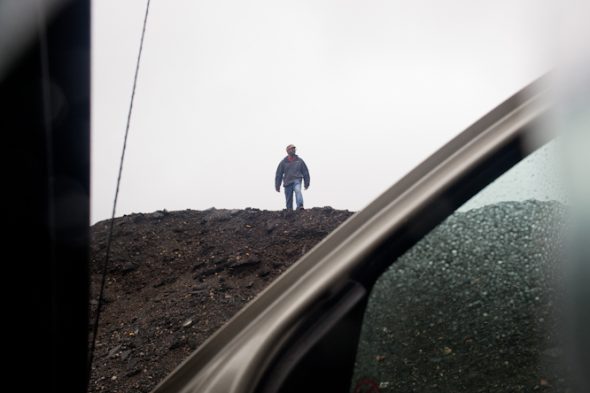
The rain begins to fall again and we have an impulse to go shoot some fireworks. We get in our car and head over to a “no trespass” zone and start firing roman candles and bottle rockets across the construction field. We climb a small hill and then fall back down. We contemplate jumping a fence and running down to some train tracks, but find the jump to the track too steep. The only jacket I’ve had on this entire trip is a cardigan, and when it rains it does me no good. The rain comes in and out and without an umbrella or a jacket, I become the victim of her mood swings.
As all this happens, I wonder why we just weren’t sleeping with the rest of the congregation. Why can’t we just stay put? What is it in us that keeps us doing this. Do people even care anymore? If I start doing “IOAH’oih’fouh’0rh2′oh ht would anyone notice? If I Or will people still just say “mashaAllah, great blog brother!” or “where are the pictures of the food?”
Who knows? But what matters is – we do care. We are wide awake.
Category:
Tagged with:
Share it:
Comments Off on Day 16 – Asalamalaykum Sister, do you own a farm?

Day 16. Regent Park.
Toronto Downtown Muslim Community. Omar Bin Khattab Mosque. 234 Parliament Street.
Whenever downtown Muslims say Par-li-a-ment.
Everyone knows exactly which masjid is meant.
Category:
Tagged with:
Share it:
Comments Off on 30Mosques.com | Day 26: Finding ‘Qadr’
By Bassam Tariq
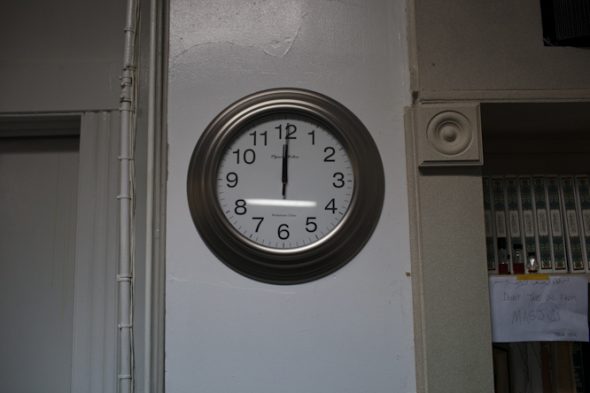
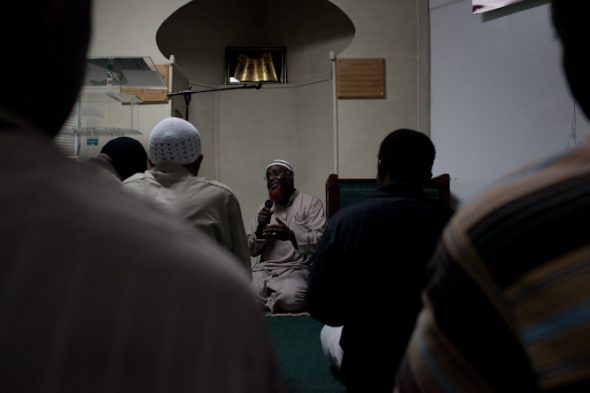
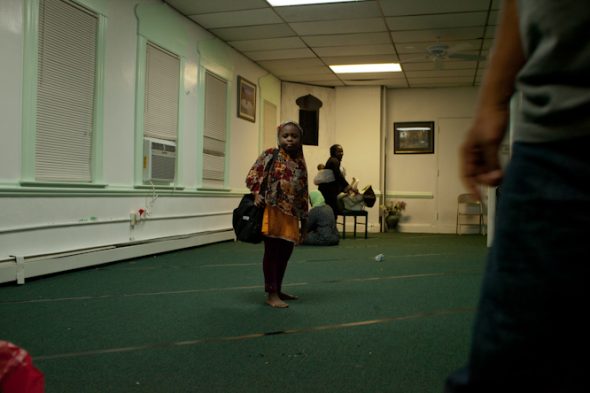
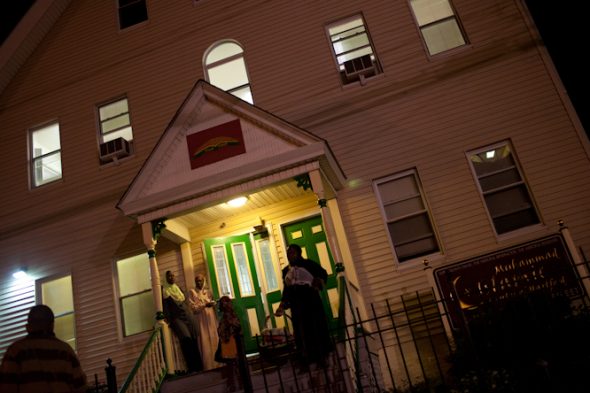
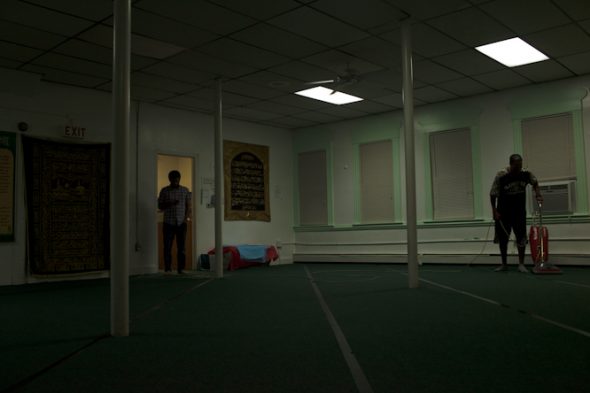
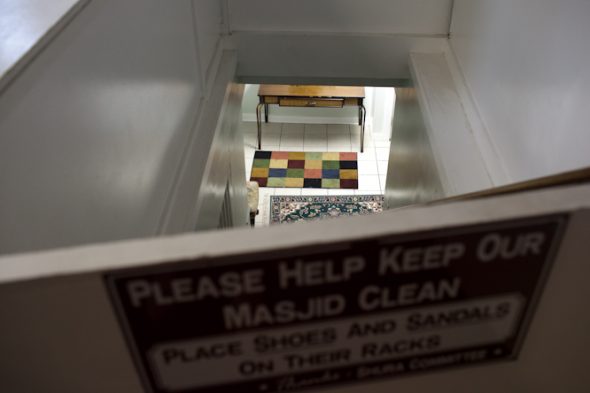
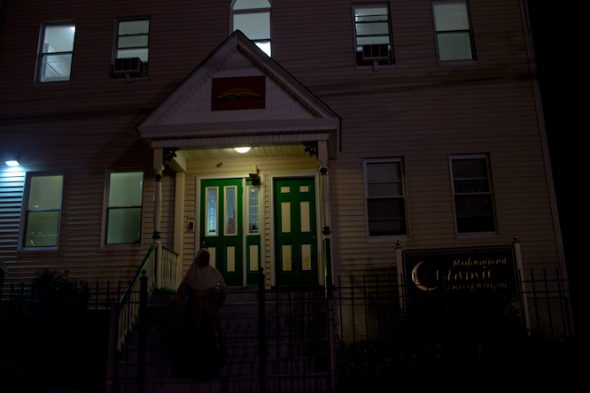
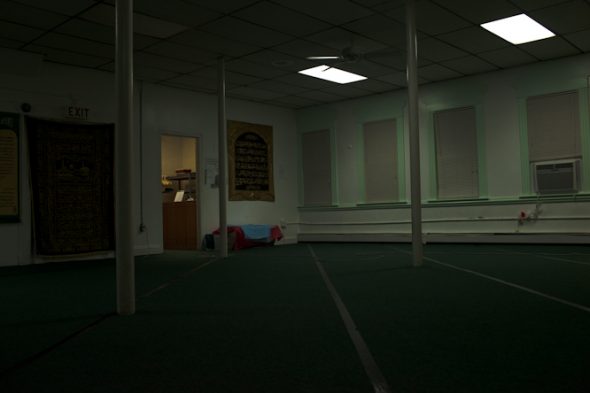
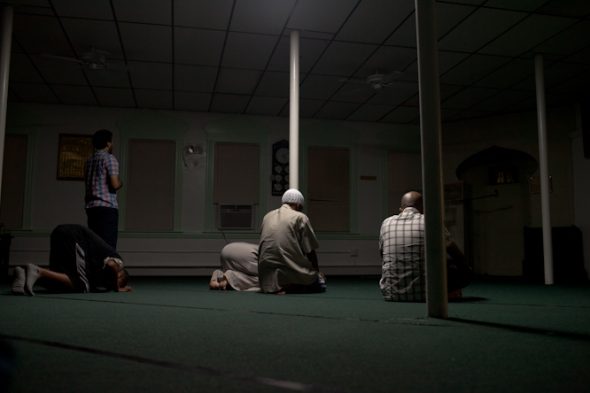
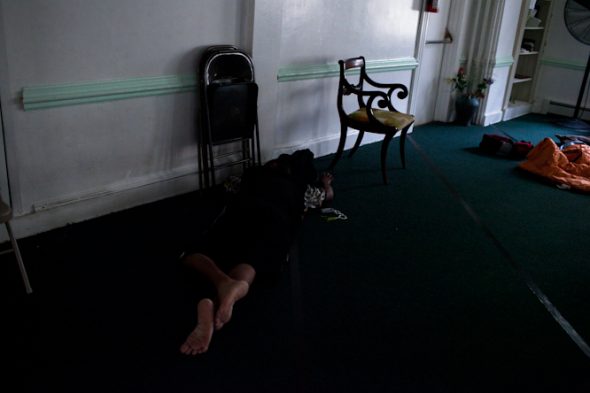
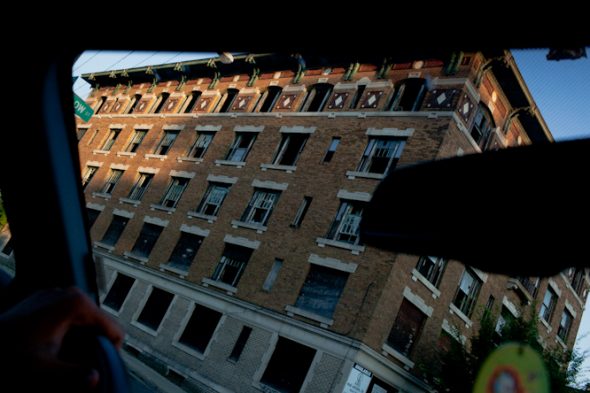
It is the 27th night of Ramadan and we are locked in. The Mohammad Mosque is located in the hard streets of Hartford, Connecticut. The cops have already pulled up twice, once to stop a fight and the second time to stop a rape. No joke. So we stay put inside and try to make the best of the night that’s ahead.
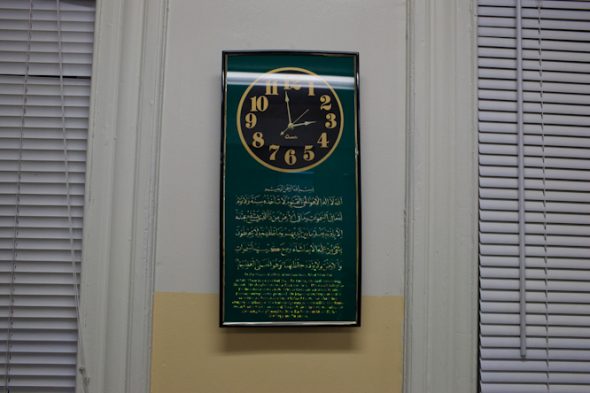
Tonight is the night where many Muslims will stay up searching for what might be the most important moment of their entire lives. It is believed to be the night when the first verses of the Qur’an were revealed -Laylat al-Qadr (The Night of Qadr). There is no direct translation of the Arabic word Qadr, but there are those words that come close to it – i.e.: Destiny, Power, Measures, Decree, etc. It is considered the most blessed night, but no one knows the exact night it is – only that it behooves us to look for it in the last third of Ramadan. That is why there is a search for it in the last ten days of Ramadan and more specifically a search from sundown till sunrise. As the verses revealed in the Qur’an state: “it is all peace, until the rise of dawn.” So we search till daybreak.
Category:
Tagged with:
Share it:
It was seeing Jenny’s commitment in her five daily prayers, not letting her lack of Arabic Language stop her from praying, that sparked Omar’s heart.
We all have to start somewhere.
Jenny is learning Arabic with Omar’s help, and will gradually begin reciting all her prayers with verses of the Qur’an in Arabic.
God-Alone Willing.
InshAllah.
Share it:
Comments Off on Day 16 – Omar and Jenny
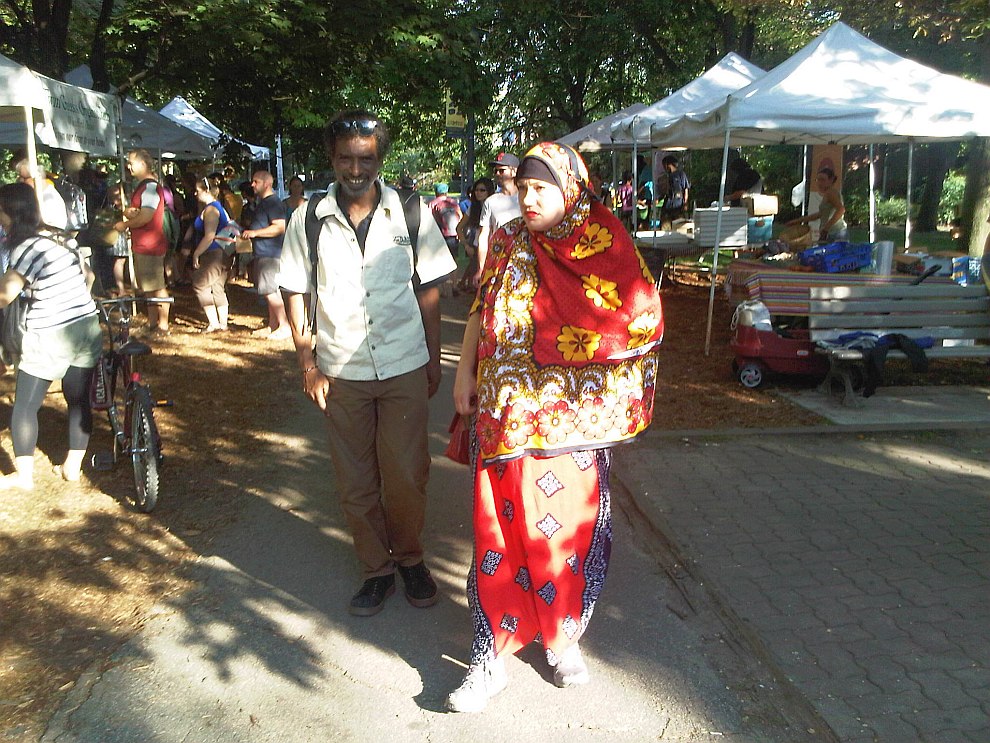
Omar and Jenny are standing in Trinity-Bellwoods Farmers’ Market.
It’s Tuesday, Asr time. Time for their weekly grocery shopping trip. They are gathering organic ingredients for tonight’s Iftar.
They’ve invited me to break fast with them and stay for Iftar Dinner.
It will be the first home cooked meal, and the first time during this 30 Masjids journey around town, I won’t be inside a Greater Toronto Area masjid for Maghrib.
Category:
Tagged with:
Share it:
Comments Off on 30Mosques.com | Day 25: Pointed In The Right Direction
By Aman Ali
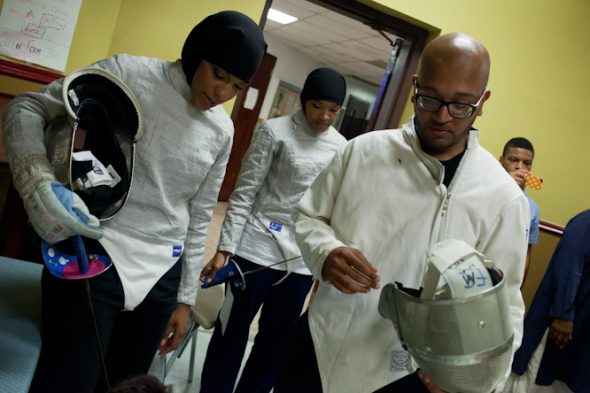
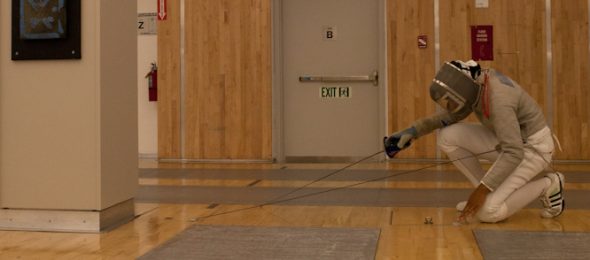
Ibtihaj Muhammad stares me down as I lace up my Puma sneakers and grasp my fencing sabre. One of us is a world-class fencer training for the U.S. Olympics team. The other has played a Star Wars lightsaber game a few times on Nintendo Wii.
The five-point match begins. I dash forward and my sabre grazes her side. I’m stunned I was able to score a point on her, but hey I’ll take it. The Slumdog Millionaire song “Jai Ho” reverberates in my brain as my head is temporarily filled with delusions I have a chance to beat her.
Next point, I take a brief second before I attack and notice an opening on her left arm. I lunge towards her with the hopes of striking her. I miss. My sabre whiffs in the air and she responds by essentially smacking me in the face with the broadside of her weapon.
The song in my head stops. I lose 5-1.
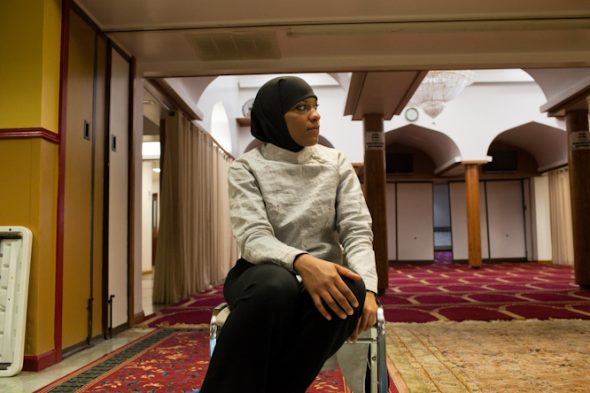
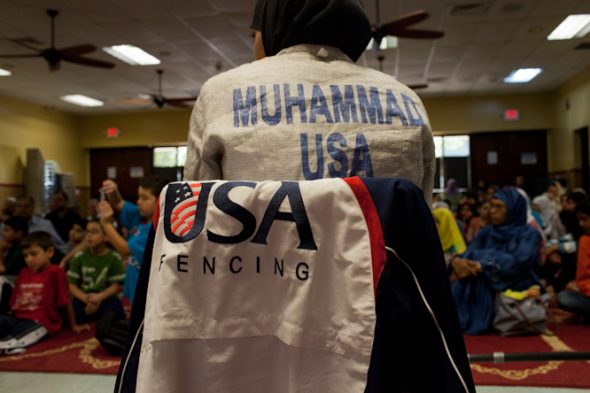
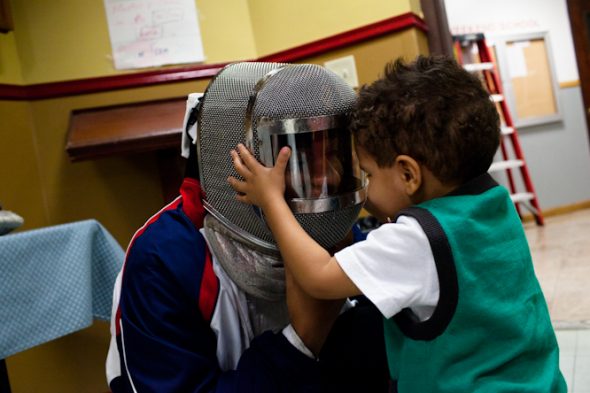
Ibtihaj has gained massive attention as of late not only because of her skills but the fact that she’s a practicing Muslim and wears the headscarf. When she travels around the world for tournaments, she’s often mobbed by fans such as the time she went to France last year in midst of the country’s whole burqa-banning bonanza.
“I was swarmed by the French press and literally had hundreds of kids asking me for my autograph,” she said. “I was almost ejected from the event because I was so busy signing these autographs.”
“When you go abroad, you think people are afraid of Muslims,” she added. “But you almost become an ambassador for the Muslim community here in America, whether or not I like to. I wear the hijab so people see the United States logo on my uniform and are curious more so than anything.”
One of the reasons she took on fencing was she wanted to play a sport that didn’t restrict her desire to dress modestly as a Muslim woman. She played volleyball in high school but oftentimes felt awkward doing it.
“The fact that I wore hijab, I couldn’t wear the tank top that they wore for the matches,” she said. “ I had to wear long sleeves. I couldn’t wear the spandex they wore because I had to wear sweatpants. I stood out like ‘Here’s Team Ibtihaj and here’s the rest of the team.’”
Earlier in the day, I met up with her in New York City to watch her train at a fencing studio in Manhattan. Her feet thunder towards her sparring partner Luther with the hopes of intimidating him. She tricks Luther to move forward by twirling her sabre around in a tease. She responds by crossing over to his other side and striking him with a winning blow.
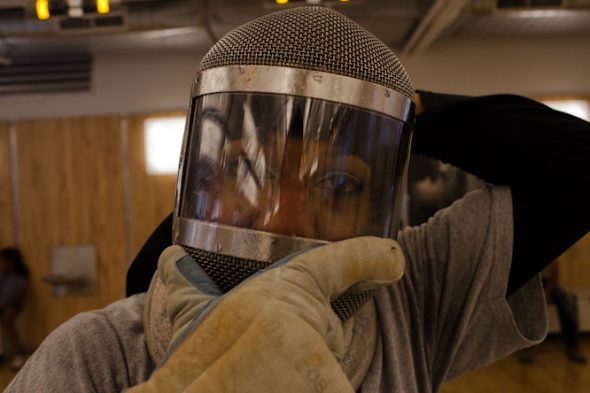
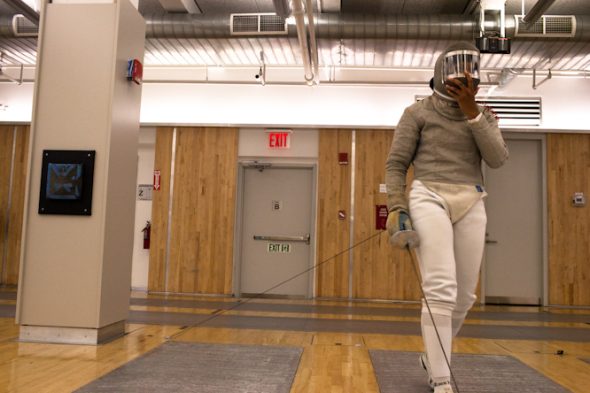
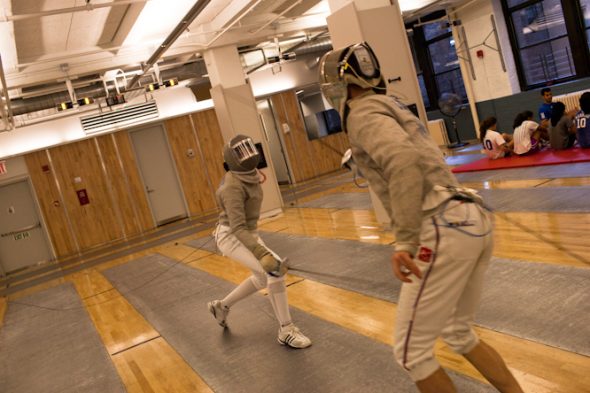
She and I broke our fast later in the day at the Islamic Society of Central Jersey. The mosque there promoted our arrival there by advertising the community that we were going to fence each other inside the mosque. Over 200 people showed up to watch me get destroyed.
We both talked massive trash with each other leading up to the fight and after I lost, I asked her where she gets her strong sense of competition from.
“I’m very competitive by nature,” she said. “Like if we were playing checkers right now, I’d probably try to kill you in that too.
“Now that I can beat you in,” I replied back, pondering if I should load up the checkers app on my smartphone and let her know what’s up.
“Ok fine, I’ll probably lose, but I’m super competitive,” she replied. “Even when my sister and I are walking up the stairs from the train, we’ll race up the stairs. I can’t help it.”
Her competitive spirit also comes from her parents. Her father Eugene, a retired cop, said he and his wife pushed all their kids into playing sports.
“It occupies their time and doesn’t leave their time for idle stuff,” he said. “We figured between the homework and being involved in sports, they wouldn’t be involved in other activities that leave down a negative road.”
Ibtihaj trains full time as a fencer. Several fencing committees provide her grants to travel the world and compete in tournaments. The United States will only choose two women to represent them next year at the 2012 Olympics and she stands a good chance in making the cut. With all the attention she gets as of late, I ask her what I’ve been asking a lot of people on this trip, how she keeps herself in check.
“I never want to think too highly of myself because when you do, you’ve almost defeated yourself,” she said. “There’s nothing left for you to accomplish. If I don’t think of myself in the highest level, I know there’s still more I can attain and goals I can reach.
“You know, I am always shocked when people want my autograph or a picture with me,” she added. “But when you’re praying five times a day and keeping Allah in mind, I think it’s hard to lose yourself in the grandiose idea of stardom.”
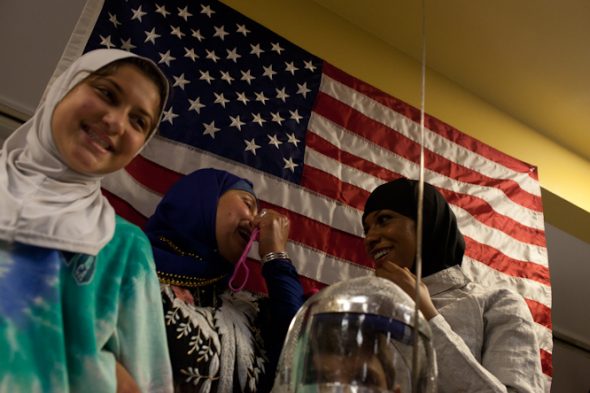
Many of the people that came to the mosque to see her fence are young Muslim girls. They swarm her after the match asking her all sorts of questions. She said she’s embraced her public role with the hopes it can encourage young Muslim girls to excel at sports too.
By competing so intensely with some of the world’s best athletes, I asked her how she handles defeat.
“I’m never fully satisfied,” she said. “I feel like I always leave a competition upset at myself. Sometimes I come home feeling defeated even though I’ve made a final or two. I’m always critiquing myself and figuring out a way to some day (God willing) to win.”
I follow up by asking her how critiquing herself doesn’t lead to low self-esteem and insecurity.
“It’s tough to find that balance. My mom has to remind me all the time about how good I actually am. I think modesty is a huge part of being a good athlete. Look at Muhammad Ali, sure he portrayed publicly as an overly confident and cocky guy, but he’s a human being and at some level he had to be self-conscious.”
Her younger sister Faizah also fences. Ibtihaj said whenever she spars with her, she refuses to go easy on her.
“My sister is naturally gifted and has a natural knack for fencing,” she said. “For me, I always had to work hard to be good at it. I want her to realize if she took her natural abilities to work hard, she could be one of the best fencers in the world.”
Being in the public spotlight also comes with the territory of random people trying to holler at you, something I know too well.
“It’s funny when people in the audience are trying to propose to you when you walk into the match getting ready to fence like in one time when I was in Tunisia,” she said. “But I try to make light of everything because funny things always happen when you travel abroad.”
Being a formidable female athlete, I’m wonder if men find her to be intimidating.
“I think people find my personality intimidating period,” she said with a laugh. “I can be abrasive and sometimes curt. I feel like people would find that more offputting than me being an athlete.”
Her parents do ask her about when will she settle down and get married, but her father tells me they try not to pressure her.
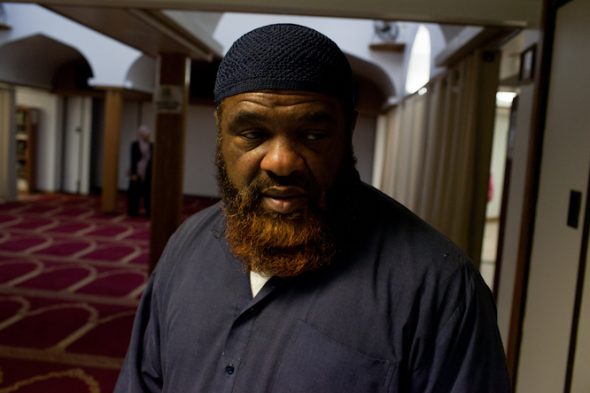
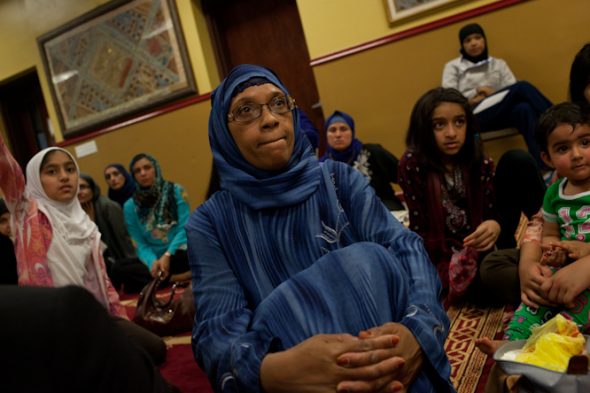
“She’s had people inquire about her before” he said. “I tell them right now she’s so focused on fencing that even if she got married now, it might be a detriment to her marriage because she’s gone all the time.”
Sorry fellas.
Right now, she’s focused on training for the Olympics and trying to connect with young people interested in fencing.
“I remember when I started fencing, how mean some of the older athletes were to me,” she said. “So I always try to remind myself with these kids that I was once in their position. Even saying hi to them goes a long way. These kids, you’re the Michael Jordan of fencing to them. It’s really humbling to know that someone thinks that much of you when I feel like I’ve barely done anything and just getting started.”
Category:
Tagged with:
Share it:
Comments Off on 30Mosques.com | VIDEO: Day 24: Freeway Freestyles
By Bassam Tariq
Freeway spits a few verses inside an Indian grocery store during a segment we like to call “Saffron Cipher”
Category:
Tagged with:
Share it:
Comments Off on 30Mosques.com | NOTES: On The Road
By Bassam Tariq
We’re in N. Smithfield, Rhode Island. Already had an earthquake on this trip, now comes a hurricane.
Category:
Tagged with:
Share it:
Comments Off on 30Mosques.com | Day 24: Meeting Freeway
By Aman Ali
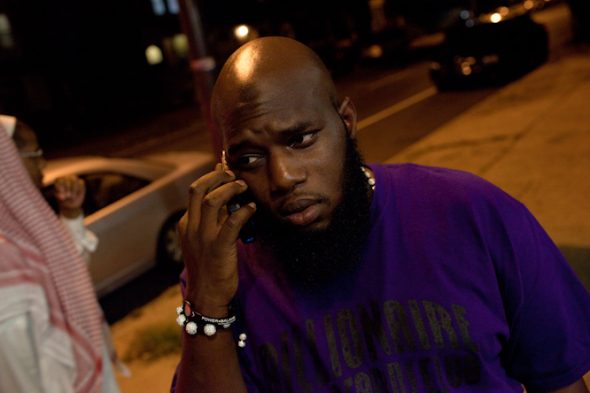
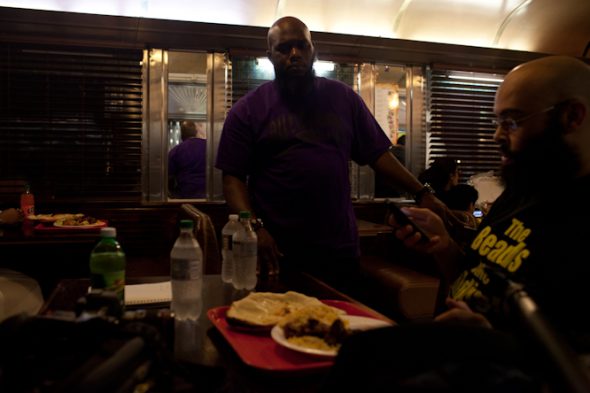
Freeway puckered his lips and stroked his fleecy facial hair as I asked him about the purple “Billionaire Beards Club” shirt he was wearing. Breaking out in the hip-hop scene on Jay-Z’s Roc-A-Fella label in the early 2000s, his distinct look brands an image into your brain just as much as his rhymes.
“I’m a Muslim,” he said. “So this beard, it’s an attribute of a Muslim. It’s a part of me, so I’m just doin what I’m doin normally.’
“Where I’m from here in Philadelphia, this city has a huge Islamic community so its normal,” he added. “Especially when you walk out in the streets out here, people know who I am so they don’t look at me like I’m going to blow up a plane.”
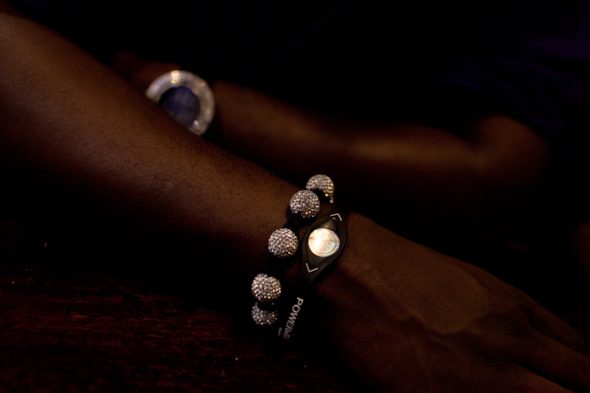
The Philadelphia Muslim community has its own charm to it. They’ve got this in-your-face and unapologetic pride in being Muslim. What also stands out is the community’s heavy influence from street culture. It’s not uncommon to see someone with a long beard and traditional Muslim garb accessorized by gold teeth and an iced-out watch. It’s hard to explain with words though, what may seem odd anywhere else is the beautiful norm here in Philly.
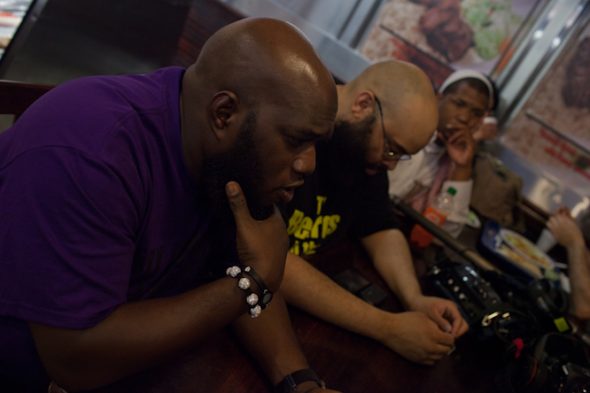
I met Freeway in downtown Philadelphia alongside three of his friends at a local Indian restaurant. One of them was Freeway’s barber, who points to my face and asks me where I got my beard lined up. I told him I did it myself in the bathroom when I woke up today.
“Well, I might have to ask you to grab a chair in my shop then,” he said with a laugh.
Philadelphia wasn’t a scheduled stop on our tour, but when Freeway’s manager reached out to us asking if we wanted to meet him, it was a no brainer for me to hang out with one of my favorite rappers I listened to in high school.
Freeway has a vibrant and unshakeable demeanor when he’s onstage rapping but in real life he can be a reserved man of a few words. He stares across the room and rubs his hands together in the air as he repeatedly takes a few moments for deep thought.
Freeway embraced Islam in his teenage years while growing up in Philadelphia. He prowled the city’s hip-hop scene battle rapping anyone who wanted to step into the ring with him.
“I just loved the music,” he said while reaching for a piece of tandoori chicken. “It was just something I knew I was good at. I always felt like I had a shot so I kept working at it. Whenever someone else blew up, I never hated on it. I always felt like I’d get my time too.”
Soon, rapper/mogul Jay-Z got word of Freeway’s talents and signed him to Roc-A-Fella records. Freeway became an overnight success with producers like Kanye West maestroing his debut album. That’s when he decided to go on Hajj for the first time in 2004 with Jakk Frost, a Philly rapper sitting next to him whose bond with Freeway goes beyond music.
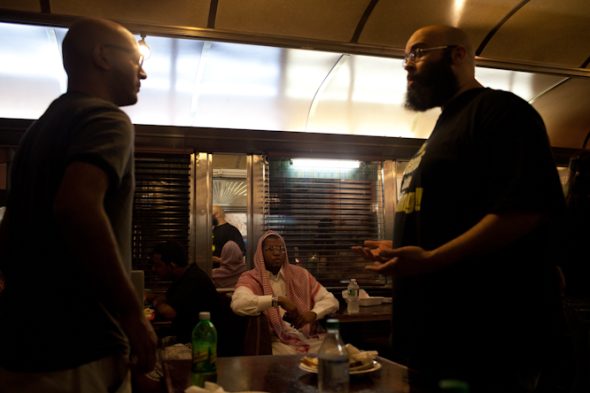
Jakk Frost is a beast of a man. Words come out of his mouth with a thundering boom and just looking at his hands I know he could probably crush someone like crumpling up a piece of paper. But he offsets that with an affable tone in his voice. Speaking to him you get a sense of an incredibly deep sense of loyalty and friendship to Freeway, which is why Freeway brought him on Hajj in 2004.
“I wanted to go on Hajj because it’s part of my religion,” Freeway said. “It’s one of the five pillars of Islam and I finally had the free time and the money to do it.”
“And he had somebody to get on his nerves about it, hahahaha,” Jakk Frost said with a bellowing laugh.
Being in Saudi Arabia to make the holy pilgrimage was an eye opening experience for Freeway, especially when visiting the Kabah, the Islamic holy house Muslims all around the globe pray towards every day .
“When I got to Mecca and saw the Kabah, I just broke down and busted into tears,” he said. “I mean, this is the house that Abraham built. I’ve prayed to this place for a large part of my life. It just touched me man – it was a beautiful experience.”
It also started making him think about the decisions he was making in his own life.
“I buckled down,” he said. “Someone told me over there, ‘If you go back home and you’re doing the same things you were doing before, then you didn’t get anything out of your Hajj. I became more aware of what I was doing as far as how I was dealing with people and I tried to cut out a lot of extracurricular activities I was doing. You know, I was just trying to make my life better.”
He was one of the hottest rappers on the scene at the time but that Hajj trip also made him think about walking away from music altogether.
“When I’m rapping, people listen to my music and could be doing other things like remembering Allah,” he said. “The time I take to create the music, I could be doing other things too regarding Islam.”
Roc-A-Fella records slowly started to crumble shortly after because of internal management problems much to the shock of Freeway and fans like myself all around the world.
“We didn’t expect it,” he said. “We thought Roc-A-Fella was going to live forever. Just being in the mix of it, we thought it was never going to stop. “
Freeway is now signed to Rhymesayers Entertainment, an independent label featuring fellow 30 Mosques friend Brother Ali. He said he enjoys what he’s doing now and there’s no animosity with his Roc-A-Fella friends of the past.
“I’m still cool with everybody,” he said with a nod. “I talk to Jay still, so we’re good. The whole label thing may have fallen apart but the strong will survive.”
“Right now, I’m just grateful that 10 years later, I’m still relevant,” he added. “I’m thankful I still get 3-4 shows a month. And that sense of thankfulness, it comes from Islam.”
Freeway has never been ashamed of being Muslim, but it wasn’t until recent years when he decided to talk more publicly about his faith.
“I think it has a lot to do with me getting older and more mature,” he said. “It just naturally leads to me embracing it more.”
If he’s embracing the title of Muslim more, I asked him then about his lyrics. Some of his older work focused heavily on references to drug dealing and violence.
“These days, I really think about what I’m going to say because I don’t want to give people the wrong impression of something. Right now, what I rap about is my life in general. Being from the hood, I still have everyday struggles. I lost a lot of friends (to gun violence). Matter of fact, I just had a cousin that was killed.”
Being in the limelight is always a struggle for any Muslim wanting to keep his or her ego in check. Freeway said he tries to do it by reminding himself of a point early in his career. There’s an infamous video from 2001 where Freeway and his Roc-A-Fella labelmates walked into a radio station for an unforgettable freestyle session. But soon after in his career, there’s a video just as unforgettable of Freeway arguably losing a freestyle battle to a rapper named Cassidy.
“When I sit back and look back at that, I realize that was from Allah,” he said. “He always balances things out for me. Before I get too big headed he always puts me back in my place.”
“Looks like you’ve got this guy to keep you in your place too,” I quipped while pointing to Jakk Frost.
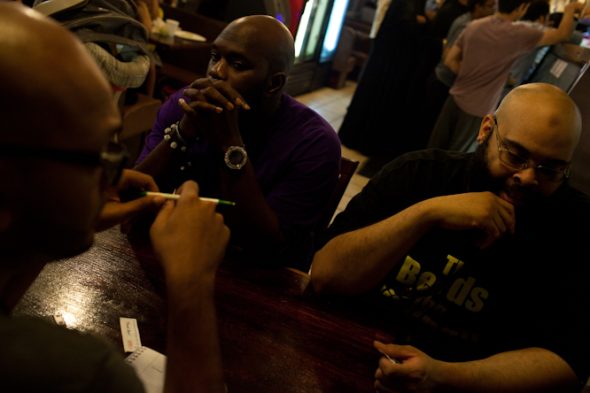
Jakk kicks his head back and thunders another laugh.
“It’s a reminder that Allah can bring people up and just smash them down like they’re nothing,” Jakk said while hammering his fist onto the table. “Like they’re nothing.’”
To this day, Freeway said he still struggles with why he’s doing music. Part of him still feels like what he’s doing is un-Islamic.
“The main reason I do music right now is to feed my family and I’m good at it,” he said. “No I don’t want to do this forever. Eventually I want to get my life together and life my life according to how a Muslim is supposed to do. But while I’m doing it, I’m doing everything else to the best of my ability to be a good Muslim – pray five times a day, fast during Ramadan, make Hajj.”
By Freeway’s side throughout the entire struggle has been Jakk Frost. The two met around 1996. For a while, it was Jakk Frost that was the better known rapper and Freeway the lesser known one. Now that the roles have changed over the years, I asked Freeway what he does to curb potential tension between the two.
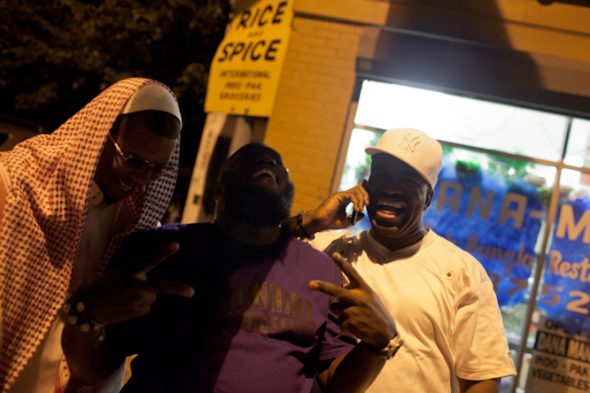
“He’s my brother and he means a lot to me,” he said. “We’ve done so much together that’s more than music. All my friends, we have a bond, that sense of brotherhood that extends from Islam. That’s our core. That’s what we have that a lot of people don’t have.”
Category:
Tagged with:
Share it:
On CJRN AM 710, half an hour before Toronto Maghrib local sunset time, Reflections on Islam Radio program broadcasts from Niagara Falls into the Greater Toronto Area.
Category:
Tagged with:
Share it:
Comments Off on Day 14 – Toronto’s Muezzin, Adnan Sirajuddin
Share it:
Comments Off on VIDEO: Day 25 – Qiyam ul Layl – Islamic Information & Dawah Centre
Category:
Tagged with:
Share it:
